
This post may contain affiliate links. For educational purposes only, not medical advice. Details
Stop Overthinking Meal Frequency
Three meals a day. Six small meals. Eat every 2 hours to "stoke the metabolic fire." You've heard it all. And most of it is noise.
Here's the protocol that actually works for the majority of carnivore eaters: two meals a day. That's it. No complicated timing windows. No meal prep Sundays that take 4 hours. Just two solid, protein-packed meals that keep you fueled, satisfied, and moving forward.
I've coached dozens of people through this transition. The ones who simplify their eating window almost always stick with carnivore longer. And sticking with it is the whole game.
The Protocol: Simple and Repeatable
Meal 1: Around 11am. This is your first real food of the day. You're breaking an overnight fast naturally. No alarm clocks for eating. Just wait until you're genuinely hungry.
What goes on the plate:
- 4-6 eggs cooked in butter or tallow
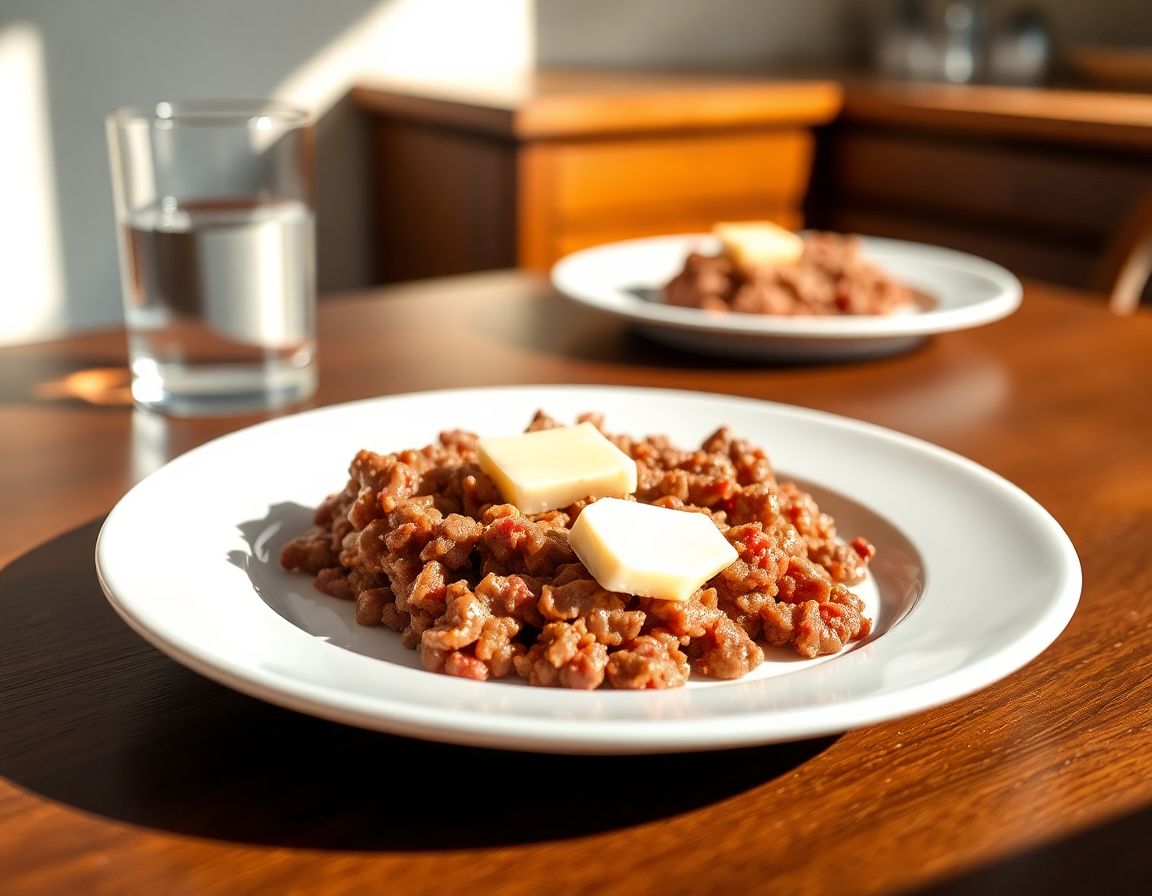
- 8-12 oz ground beef (73/27 or 80/20) or a small steak
- Salt generously
- Target: 50-60g protein minimum
This meal is your foundation. It sets your energy for the afternoon. Don't skimp on protein here. If you're eating 3 eggs and calling it a meal, you're undereating. That's not discipline, it's a setup for a 3pm crash.
Meal 2: Around 6pm. This is the bigger meal. You've trained, worked, moved through your day. Now you refuel properly.
What goes on the plate:
- 12-16 oz ribeye, NY strip, or chuck roast
- Optional: 2-3 eggs on the side
- Butter or tallow for cooking and topping
- Target: 60-80g protein
Between these two meals, you're hitting 110-140g of protein. For most people between 150-200 lbs, that's right in the sweet spot for muscle maintenance, recovery, and satiety.
Why This Works (The Math Doesn't Lie)
Let's talk about what actually happens in your body when you eat this way.
Insulin stays low between meals. When you eat only twice, your insulin spikes twice. Compare that to six meals where insulin is elevated almost constantly throughout the day. Lower baseline insulin means better fat oxidation. Your body actually gets to use stored energy instead of constantly processing incoming food.
Meal prep drops to near zero. Two meals means two cooking sessions. Most people can cook eggs in 5 minutes and sear a steak in 10. You're spending maybe 20 minutes total on food each day. That's it. No Tupperware towers in the fridge. No reheating sad chicken breasts at your desk.
Grocery spending goes down. When you know exactly what you're eating, waste disappears. A dozen eggs costs $3-4. A pound of ground beef runs $4-6. A ribeye is $10-15 depending on where you shop. You're looking at $15-25 per day for high quality nutrition. Ground beef is your best friend on a budget.
Decision fatigue vanishes. You don't stand in front of the fridge wondering what to eat. The protocol is set. Cook, eat, move on. This sounds small, but it's one of the biggest reasons people stick with carnivore long term. Simple systems create consistency.
Who This Is For (And Who Should Skip It)
The 2-meal protocol works best for:
- Adults maintaining weight or in a slow recomp phase
- People with desk jobs or moderate activity levels
- Anyone who finds 3+ meals per day exhausting to plan
- People who naturally aren't hungry in the morning
Who should stick with 3 meals:
- Pregnant or nursing women. You need consistent caloric intake throughout the day. Don't experiment here.
- Underweight individuals trying to gain. Two meals makes it harder to hit the calorie surplus you need.
- Athletes in heavy training blocks (2+ hours daily). You need fuel spread across the day to support performance and recovery.
- Anyone with a history of disordered eating. Restricting meal windows can trigger old patterns. Work with a professional.
This isn't intermittent fasting dogma. I'm not telling you to hit a 16:8 window or track your fasting hours in an app. I'm saying most carnivore eaters naturally gravitate toward two meals because the food is so satiating. If you want to explore structured fasting, that's a different conversation.
The Adjustment Period
If you're coming from 3+ meals a day, expect 5-7 days of adjustment. You might feel hungry around your old meal times. That's habit, not genuine hunger. Your body is used to the signal, not the need.
During the first week:
- Keep electrolytes up. 2-3g sodium per meal minimum. A pinch of salt in water between meals helps.
- Don't force it. If you're genuinely hungry at 3pm, eat something. A few slices of beef or a couple eggs. Then gradually space it out.
- Track your protein for the first 2 weeks. Make sure you're actually hitting 100g+ per day. Most people undereat protein when they drop a meal.
By week 2, most people report they're not even thinking about food between meals. The cravings that used to hit at 10am and 3pm just stop. That's not willpower. That's stable blood sugar doing its job.
A Real Day on the Protocol
7:00am: Wake up. Black coffee or water with a pinch of salt. You're not starving. Don't eat yet.
11:00am: Meal 1. Scramble 5 eggs in butter. Cook 10 oz ground beef with salt. Eat at the table, not at your desk. 10 minutes to cook, 10 minutes to eat.
11:30am - 5:30pm: Work, move, train. No snacking. Just water, maybe more salt if you're sweating.
6:00pm: Meal 2. Sear a 14 oz ribeye in tallow. Finish with butter. Side of 3 eggs if you're extra hungry. Eat until satisfied, not stuffed.
6:30pm: Done eating. The kitchen is clean by 7pm. You've spent a total of 25 minutes cooking today.
Start Here, Adjust Later
This protocol is a starting point. Some people shift meal 1 earlier. Some push meal 2 later. Some end up naturally moving to one meal a day after a few months. That's fine. The point isn't rigid timing. It's building a system that makes carnivore easy to maintain.
Protocol beats willpower every time. Set up your two meals, keep the protein high, and stop overthinking it. The simplicity is the advantage.
I'm not a doctor. I've coached people and competed myself, so I know what works. But I'm not your doctor. If you have health issues or take meds, check with someone qualified. Everything here is based on what works in practice and what research supports. Your mileage may vary.