
This post may contain affiliate links. For educational purposes only, not medical advice. Details
The Same Question, Over and Over
"So what can I actually eat?"
I've heard it hundreds of times. From readers. From friends who watched me eat steak for breakfast and finally decided to try it themselves. From women in my DMs at 10 PM on a Sunday asking whether cream cheese counts as carnivore.
For a long time, my answer was the same thing every time. I'd type out a quick list. Beef, pork, chicken, lamb, fish, eggs, butter, tallow, bone broth. Maybe I'd add some notes about organ meats or how dairy is optional depending on tolerance. Then I'd send it. Then the next person would ask the same question, and I'd type basically the same list again.
The Grocery Store Moment
It clicked for me when a friend called me from the produce section of her local grocery store. She'd been eating carnivore for four days and she was standing in the meat aisle with her phone in one hand and a package of chicken thighs in the other, trying to remember if bone-in was better than boneless.
"I just need something I can look at," she said. "Like a cheat sheet. I keep second-guessing myself."
She wasn't confused because carnivore is complicated. It's actually one of the simplest ways to eat. She was confused because starting anything new creates a fog of uncertainty, and when you're in a grocery store surrounded by 40,000 products, even a simple diet can feel overwhelming.
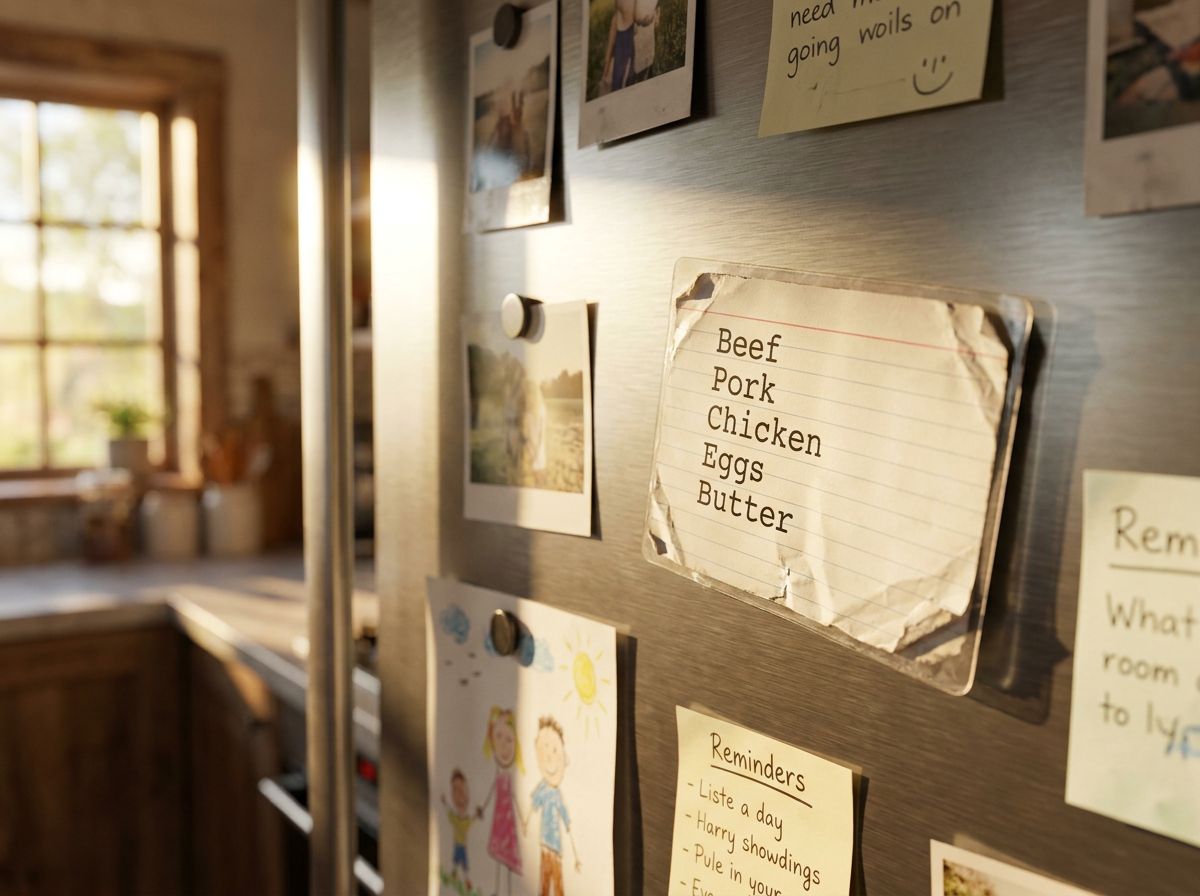
I told her I'd make her a list she could stick on her fridge. That weekend, I sat down and actually did it.
From Texting Lists to Something Better
The first version was ugly. I'm not a graphic designer. I typed up the food categories in a document, printed it, and stuck it on my own fridge to see if the layout made sense. It did, but it looked like a tax form. Nobody wants a tax form on their fridge.
So I started sketching. I drew little watercolor illustrations of the foods. Organized them into clear groups: ruminant meats, poultry, seafood, eggs and dairy, fats and cooking oils, organs. I wanted it to feel like something you'd actually want to look at every day. Not clinical. Not boring. A reference that was as simple as the diet itself.
The funny thing is, making the card taught me something about how people learn. When I write a 1,200-word post about digestive adaptation during the transition period, that's useful for understanding the why. But when someone is standing in a grocery store at 6 PM trying to figure out dinner, they don't need the why. They need the what. One page. Clear categories. No guessing.
What Goes on a Carnivore Food List (and What Doesn't)
The decisions I made about what to include were deliberate. Carnivore has some gray areas that people argue about constantly. Coffee. Honey. Spices. Heavy cream. Different people draw the line in different places, and honestly, that's fine. Your version of this diet should match your goals.
For the food list, I kept it to the categories that most carnivore practitioners agree on. Animal proteins, animal fats, eggs, and limited dairy for those who tolerate it. I left off the controversial items not because they're wrong, but because a reference card should give you confidence, not more questions.
If someone is in their first week and they're already trying to figure out whether monk fruit sweetener counts, they're solving the wrong problem. The first 30 days should be simple. Eat meat, drink water, get your electrolytes right, and see how your body responds. The nuances can come later.
The People Who Needed It Most
After I shared the card with a few readers, the responses surprised me. The people who liked it most weren't the ones who'd been eating carnivore for years. They were the brand-new beginners. The ones who'd just decided to try it and felt that particular kind of anxiety that comes with changing everything about how you eat.
One woman told me she printed it and her husband asked what it was. She explained the diet. He read the card. He said, "That's it? That's the whole diet?" And she said, "Yeah, that's the whole diet." Something about seeing it all on one page made it real and doable for both of them.
That's what I was going for. Not comprehensive. Not exhaustive. Just clear enough that you stop overthinking and start eating.
Why the Simple Tools Matter
I spend most of my time writing about complex topics. Cholesterol changes over 90 days. Hormonal shifts. The science behind why elimination diets work for autoimmune conditions. That's the stuff I find interesting, and I think it helps people understand what's happening in their bodies.
But the most useful thing I've ever made might be a one-page food list. Because understanding the science doesn't help you if you quit in week one because the grocery store felt too confusing. The research doesn't matter if you never get past the starting line.
Simple tools remove friction. A fridge card means you don't have to pull up a website or search through a Facebook group every time you're meal planning. It's just there. Visible. Reminding you that this isn't complicated, even when your brain is telling you it is.
Where This Ended Up
A while back I designed a set of printable food list cards. The carnivore card is the one that started it all. It's the card I made for my friend who called me from the grocery store, polished up with proper formatting and those watercolor illustrations I spent way too many hours on. Some people find it helpful to have a printed reference they can stick on the fridge or take to the store. I put it in my Etsy shop for anyone who wants it.
But really, this post isn't about the card. It's about the realization that sometimes the most impactful thing you can create isn't a deep dive or a research breakdown. It's the simplest possible version of the answer to the question everyone keeps asking.
What can I eat? Here. This. Print it. Put it on your fridge. And stop Googling it at 10 PM.
I'm not a doctor. I've researched this deeply and worked with many people, but I'm not your doctor. If you have health conditions, take medications, or need specific guidance, talk to someone who knows your full medical picture. Everything I write is educational based on research and what I've seen work. Your situation might be different.