This post may contain affiliate links. For educational purposes only, not medical advice. Details
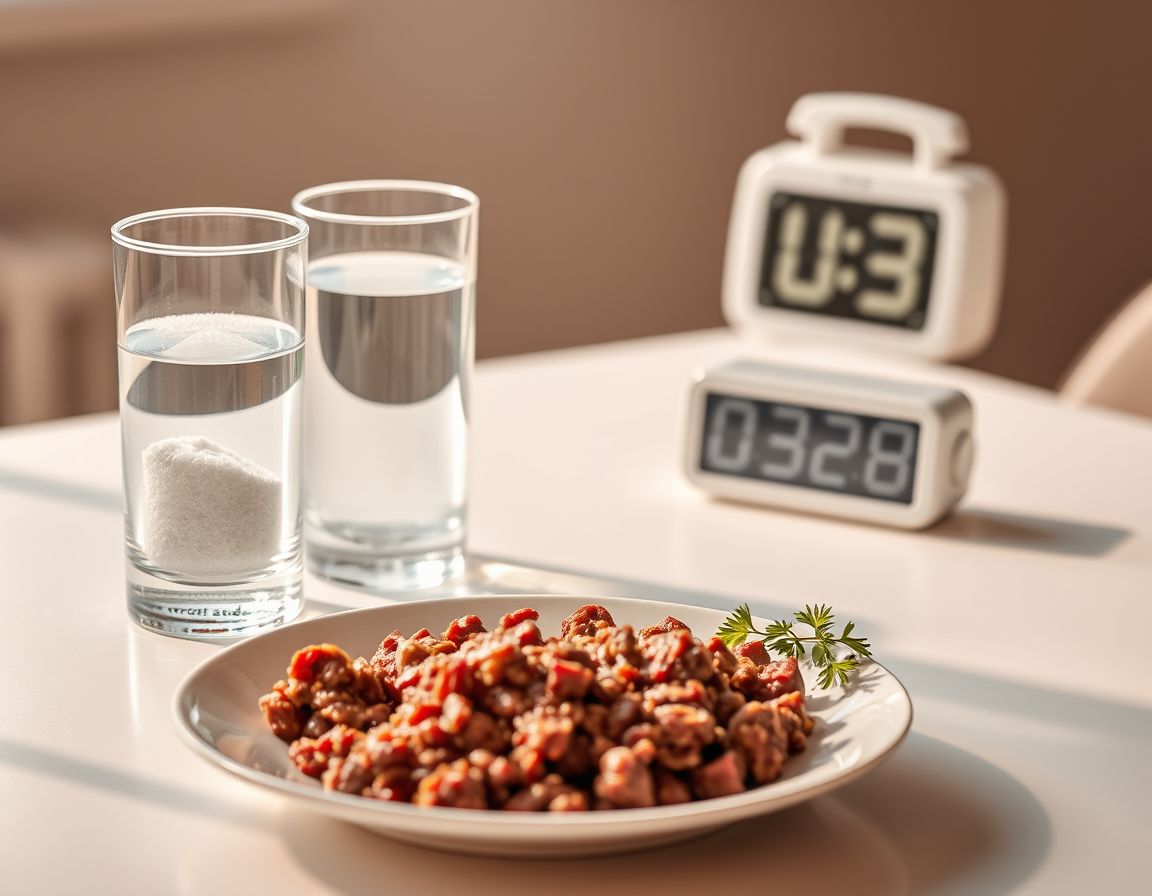
If your head has been pounding since you started carnivore, you're in very good company. A headache in the first week is one of the most common things new readers write in about. Most of the time it comes from four ordinary things: a change in caffeine, losing sodium and water quickly, eating too little, and skipping meals before your body is ready.
The good news is that this kind of headache follows a pattern. It tends to show up around day 2 or 3, peaks somewhere in days 3-10, and fades as your body settles. Most people feel adapted by weeks 4-6. Here's what's going on, what usually helps, and which headaches are not something to wait out.
If you want a starting point for how much to eat while you adjust, the free carnivore macro calculator gives you protein and fat numbers based on your goal weight.
Why week one hurts: the four usual causes
1. Sodium and water loss. This is the big one. When you stop eating carbs, insulin drops. Lower insulin tells your kidneys to let go of sodium, and water follows it out. That's a lot of the 3-7 pounds people often see on the scale in week one (less for smaller or older bodies). Losing sodium that quickly often brings a dull, heavy headache, plus tiredness.
Most people on carnivore land around 3-5 g of sodium a day, which is about 1.5-2 teaspoons of salt, spread through the day. One teaspoon of salt is about 2.3 g of sodium. This is not for everyone. Talk to your doctor first if you have high blood pressure, kidney or heart problems, diabetes, are pregnant, or take medicine. If you're on blood pressure pills, I wrote a whole post on salt on carnivore when you take blood pressure medicine, because that conversation is different for you.
I'll be honest, my own first week was foggier than it needed to be. When I started in 2018 I kept the shaker in the cupboard out of old habit, and it took me far too long to connect the headache to the salt.
2. Caffeine changes. Coffee is fine on carnivore. The trouble starts when people change their coffee habit in the same week they change everything else. Caffeine withdrawal headaches are real, and they usually hit behind the eyes or across the forehead around day 1-3.
Here's what I've seen work: keep your usual coffee or tea the same for the first few weeks. If sleep is a problem, stop after noon rather than quitting. There's more on this in our post on quitting coffee on carnivore.
3. Eating too little. Meat fills you up quickly, and many people lose their appetite in the first week. A body switching fuel sources on very little food often complains with a headache, especially if you're used to small portions.
Aim for 30-40 g of protein at each meal, which is roughly a quarter-pound to a third of a pound of ground beef or a few eggs with some meat. Don't trim the fat yet. Our default first week is simply ground beef and eggs.
4. Skipping meals too early. Many people read about fasting and jump straight in. Long stretches without food before you're adapted can bring on a headache and shakiness. Eat regular meals for now. Fasting can come later.
If you take diabetes medicine, read this part
A headache can be a sign of low blood sugar, and people on diabetes medicine are the ones most at risk when carbs drop suddenly. It can also show up as sweating, shakiness, a racing heart or confusion.
If you're on insulin or diabetes pills, check your blood sugar when a headache comes on. Fewer carbs can change how much medicine your body needs, and any change to your medicine is your prescriber's decision, not yours to guess at.
How long do carnivore headaches last?
For most people, the timeline looks something like this:
- Days 1-3: Caffeine headaches show up first if your coffee habit changed. Salt loss starts.
- Days 3-10: The roughest stretch. Headaches, low energy, and that "keto flu" feeling usually peak here.
- Weeks 2-3: Headaches usually ease. Sleep can get a little choppy for some people.
- Weeks 4-6: Most people feel adapted, and headaches are mostly gone.
If your headache lifts within half an hour of a salty cup of broth or a proper meal, that tells you a lot. Our first 30 days adaptation guide covers the whole month. The same electrolyte basics apply on keto, and KetoDial has a good walkthrough of fixing keto flu with electrolytes.
A simple first-week headache checklist
- Salt your food well and spread it through the day. A cup of salted broth is an easy fix.
- Drink to thirst.
- Keep your coffee or tea the same as before.
- Eat at least two real meals with 30-40 g of protein each.
- Hold off on fasting until you're past the first few weeks.
- For magnesium, glycinate in the evening is the form most people use. Skip oxide, it's poorly absorbed. Ask your pharmacist for the amount, because kidney function and blood pressure medicine change it.
When a headache is a reason to call a doctor
An adaptation headache is dull, comes on gradually, and tends to ease with salt, food and time. Some headaches don't fit that pattern, and these are not ones to wait out. Get medical help right away if you have:
- A sudden, severe headache, the worst of your life, especially if it comes on in seconds
- A headache with fever and a stiff neck
- Vision changes, like double vision, blurring or losing part of your sight
- Confusion, trouble speaking, or not making sense
- Weakness or numbness on one side, or a drooping face
- A headache after a fall or a bump to the head
- New headaches after age 50 that don't follow the week-one pattern, keep getting worse, or wake you at night
Your situation might be different, and that's okay. But a headache that breaks the pattern deserves a real look, not more salt.
Not a doctor: I'm not a doctor, and I have no medical training. I've spent years reading the research and living this way, and I write about what I've learned. Your body and your situation might be different.