
This post may contain affiliate links. For educational purposes only, not medical advice. Details
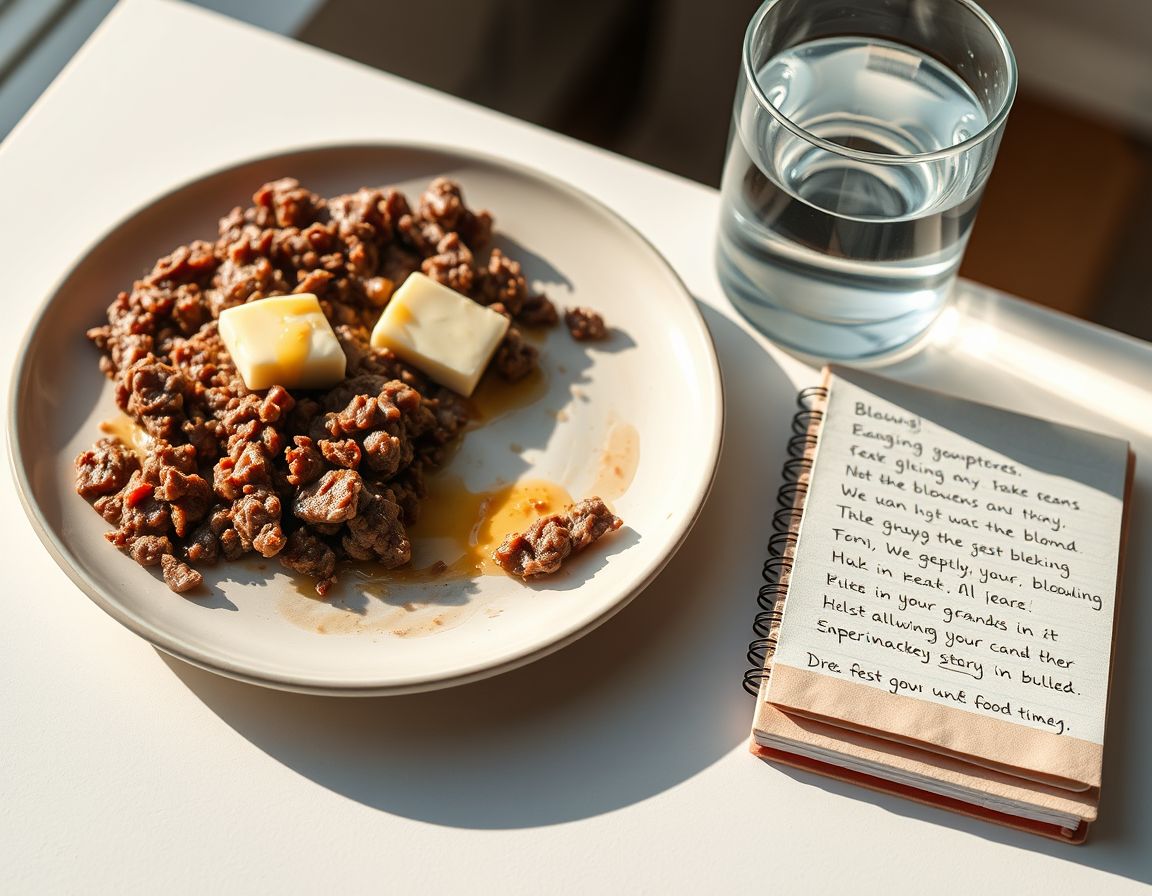
You're two months in. Maybe your joints feel better and the scale finally moved, and yet by three in the afternoon your waistband is tight. If you're still bloated on carnivore, the meat itself is rarely the problem. In the people I've worked with it comes down to one of three things: too much added fat at once, dairy, or a bacterial pattern in the small intestine that cutting plants didn't fix on its own.
Which one you have matters, because they don't respond to the same fix. Fat and dairy bloating usually improve within a week or two of a change you can make today. Overgrowth bloating holds steady or worsens no matter how clean the food gets, and that's where testing beats guessing. Here's the order I'd work through it.
Two months in is the right time to ask this
We say to judge carnivore at 60 to 90 days, so you're inside the window where troubleshooting beats white-knuckling. Digestion does shift for a while as bile and stomach acid adjust to a fattier diet. But "give it time" stops being useful around week six. If nothing has budged since week two, something specific is going on, and it's findable.
Step one: fat volume, before you remove any food
This is the step almost everyone skips, and it fixes the most cases. Protein is the anchor of this diet. Fat is the lever you adjust. A lot of people two months in are eating far more added fat than they realize: butter in the coffee, tallow in the pan, heavy cream, a fatty ribeye, then a spoon of butter on top.
Your gallbladder can only send so much bile at once. Past that, undigested fat moves along and you get bloating, gurgling, and loose, pale, floaty stool a few hours later.
So for one week, don't remove any food. Cut added fat roughly in half and leave the protein alone. Keep the meat, drop the extra butter and cream. A rough satiety baseline is about equal grams of fat and protein, and plenty of people are past that without meaning to be. If you want a starting point for your own numbers, the free macro calculator gives you one.
Split your protein up, too. Thirty to forty grams per meal digests more comfortably than one enormous dinner, and that's more true after 50, not less.
Step two: dairy, for a real two weeks
If halving the added fat didn't do it, dairy is next. Dairy is optional on carnivore, not forbidden, and plenty of people keep it forever with no trouble. But it's the most common thing standing between someone and a calm stomach at the two-month mark.
Two things cause the trouble: lactose, which lives mostly in milk and to a lesser degree in cream and soft cheese, and A1 casein, the protein form in most conventional dairy. A2 dairy and hard aged cheeses bother people less, and cheese is easy to overeat without noticing.
Give it a genuine two weeks, all of it, including the cream in your coffee. I know this is the step people hate, and readers tell me constantly that dairy is the one thing they can't picture giving up. Treat it as information gathering with an end date, not a life sentence.
Step three: eggs, coffee, and the processed edges
If your two months has included a lot of bacon, deli meat, snack sticks, and flavored powders, you haven't really tested carnivore yet. Fillers, gums, and starches bloat people. Two weeks of plain meat, salt, and water is a cleaner test.
Eggs come after dairy. Some people find eggs are their real trigger, and it only shows up once the louder suspects are gone. Coffee is worth a look too, especially with reflux.
One more unglamorous cause: constipation. Slow transit makes real distension that has nothing to do with food sensitivity. If you're going every three or four days, that's your bloating. Magnesium glycinate in the evening helps a lot of people, and skip oxide, which is poorly absorbed. Ask your pharmacist for the amount before you start: magnesium is cleared by your kidneys, so a diuretic, blood pressure medication, or reduced kidney function changes what's safe for you. Keep sodium genuinely in the 3 to 5 gram a day range too, since running low slows everything down. Our piece on electrolytes on carnivore covers how.
What bacterial overgrowth looks like instead
Here's where the pattern changes. Fat and dairy bloating tracks with what you ate. Overgrowth-type bloating tracks with time. It arrives 30 to 90 minutes after almost any meal, builds through the day, and is flattest in the morning, usually with belching, reflux, and stool that alternates between loose and stuck.
The frustrating part is that carnivore should help here. Cutting fermentable carbohydrates is the same logic behind low-FODMAP eating, and some people with years of gut pain do see things settle fast. I covered that mechanism in the carnivore gut health paradox, and the keto version of the same question lands in a similar place. But bacteria in the wrong place ferment protein and fat too, just more slowly, and diet alone doesn't always clear an established population.
Two histories make this more likely: repeated courses of antibiotics, and long-term acid-reducing medication. Some people find they need targeted treatment before diet gives them anything, and that isn't something you can do from a grocery list. If you take an acid reducer or any prescription, that's a conversation with your prescriber, not a change you make alone.
When to stop experimenting and get tested
Get help if you've honestly done the steps above and you're still bloated at 90 days. Stop the self-experiment now, not later, if you have unintended weight loss, blood in your stool, vomiting, fever, severe pain, or an anemia that's getting worse.
What to ask for:
- A hydrogen and methane breath test for small intestinal overgrowth
- A celiac panel, if it's never been run
- Thyroid labs, since a slow thyroid slows the gut
- A gallbladder check if fat is clearly the trigger
Some readers have done well with a functional practitioner after regular care hit a wall, but the workup comes first.
Be honest about expectations, too. Carnivore helps a lot of people with stubborn gut symptoms, and I'd still hold any promise of a guaranteed fix at arm's length, including ours. Two months of data on your own body beats anyone's guarantee, and you know how to read it now.
I'm not a doctor. I've researched this deeply and worked with many people, but I'm not your doctor. If you have health conditions, take medications, or need specific guidance, talk to someone who knows your full medical picture. Everything I write is educational based on research and what I've seen work. Your situation might be different.