This post may contain affiliate links. For educational purposes only, not medical advice. Details
Why Carnivore People Are Suddenly Obsessed With Beef Organs in a Pill
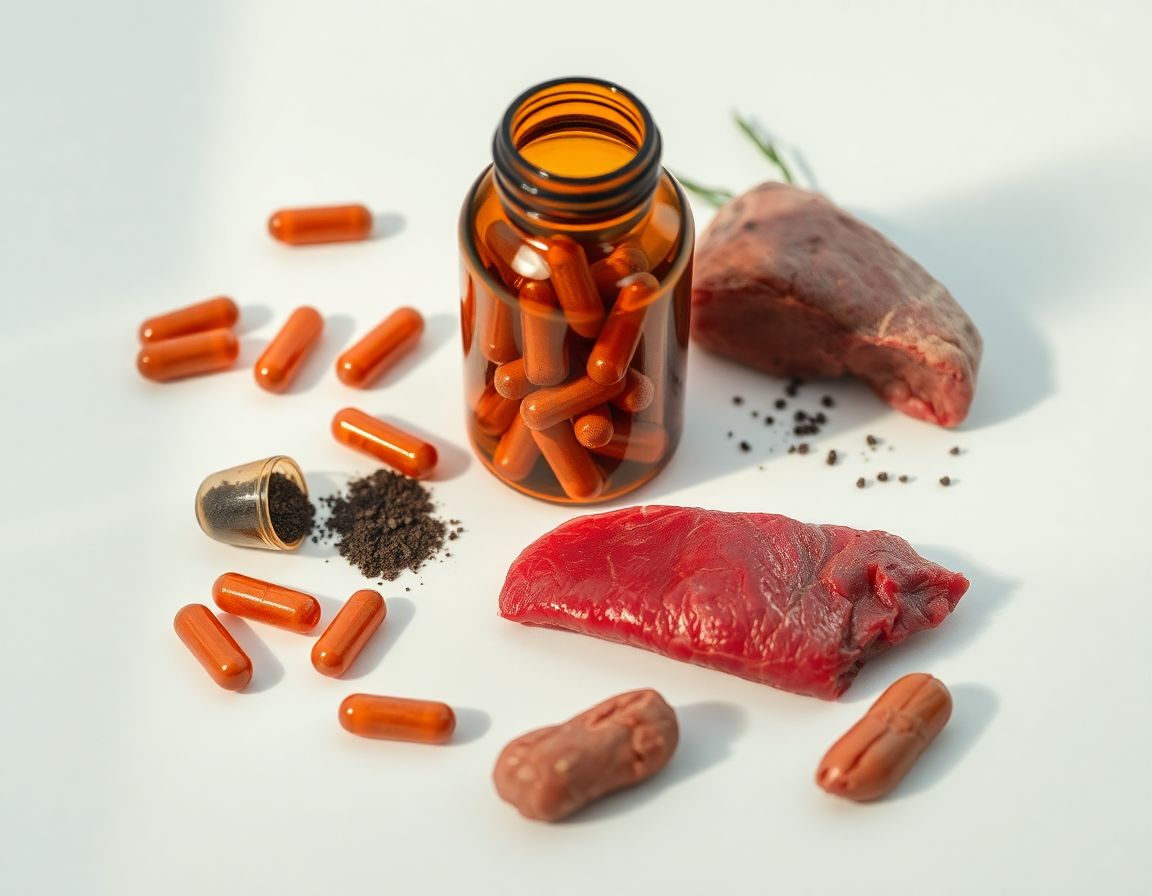
Real talk: if you've been on TikTok or scrolling r/carnivore in the last few months, you've noticed something. Liver supplements are everywhere. Freeze-dried organ capsules. "Ancestral" blends with heart, kidney, spleen, and liver packed into a single pill. Guys with enormous biceps holding up amber bottles and telling you it changed their life.
And a lot of people in the community are genuinely curious. So let's talk about what's actually happening here.
Why Liver Supplements Exist in the First Place
The honest answer is: because liver tastes like liver.
Most people know that organ meats are nutritionally dense. Beef liver in particular is basically a natural multivitamin. High in B12, folate, iron, copper, vitamin A, and a bunch of bioavailable stuff that you just don't get the same way from muscle meat alone. The carnivore community has been talking about this for years. It's not a fringe idea.
But here's the catch. A lot of people try liver once, make a face that could only be described as "genuinely suffering," and never go near it again. Even dedicated carnivores who eat nothing but steak, eggs, and butter sometimes just cannot get the taste down. The texture. The smell while it's cooking. The way it lingers.
So the supplement industry saw a gap. Take the nutritional profile of liver, freeze-dry it at low temperatures to preserve the nutrients, press it into capsules, and now you've got the benefits without the experience of eating what tastes like a metal penny wrapped in velvet.
What's Actually in These Supplements
Most of the popular brands are using freeze-dried beef liver as the base. Some add heart, kidney, or spleen. The freeze-drying process is important because heat destroys a lot of the nutrients you're trying to get. Done right, a quality freeze-dried liver capsule does retain a meaningful amount of the original nutrition.
The community is actually pretty sophisticated about this. On r/carnivore, you'll find threads where people are asking about sourcing, processing methods, whether the cattle were grass-fed, and how the products compare to just eating the real thing. It's not blind trust. People are reading labels and pushing back on vague marketing claims.
That's a good sign. Because not all of these products are created equal. Some are using lower-quality sources, padding with fillers, or making claims that outrun what the evidence actually supports.
The "Does It Count" Debate
Here's where it gets fun. There's a genuine debate running through the community right now about whether taking liver capsules is "real" carnivore or whether it's just a supplement. And if it's a supplement, does it count toward your organ meat target for the week?
The purist camp says eating real liver is categorically different from freeze-dried capsules. You get the whole food matrix, the cofactors, the experience of actually eating food. They're not wrong about the whole-food-matrix argument. Food is complex. Nutrients interact in ways that isolated supplements don't fully replicate.
The pragmatist camp says if you're getting the nutrients and you weren't going to eat the liver otherwise, then what's the problem? The goal is nutrition. If the capsule gets you there, use the capsule.
Most people land somewhere in the middle. Supplements as a backup when you're traveling, or as a bridge while you work on tolerating real organ meat. Not as a permanent replacement for actually eating organs if you can manage it.
Do They Actually Work?
The community feedback is genuinely interesting here. A lot of people report feeling better on organ supplements. Energy, mood, recovery. Whether that's a direct nutrient effect or a correction of deficiencies they didn't know they had is hard to say without bloodwork before and after.
What's worth noting: if you're already eating a solid carnivore diet with a good amount of red meat, eggs, and some variety, you're probably not deficient in most of the things liver supplements are targeting. The biggest wins seem to come from people who were eating a very limited diet before, or who were genuinely low in B12, iron, or copper.
If you're curious about how your overall diet stacks up nutritionally, the Carnivore Diet Food List breaks down what you're actually getting from the core foods, which gives you a useful baseline before you decide whether to add a supplement.
The Cost Math
This is where people start raising eyebrows. A month's supply of a quality beef liver supplement from a reputable brand runs somewhere between $35 and $70. Usually around 6 capsules per day to get what they describe as the equivalent of eating liver several times a week.
Meanwhile, actual beef liver from a grass-fed source at a farmer's market runs maybe $5 to $10 a pound. One or two servings a week. Even if you don't love it, there are ways to mask the taste. Mixing it into ground beef. Freezing it and eating it raw in small pieces (a surprisingly common trick in the community). Marinating it. Cooking it with bacon until you barely notice it's there.
The supplement is convenient. The real thing is cheaper and probably more complete. If cost is a factor for you, that's worth knowing.
Where the Community Actually Lands
The TikTok explosion around these supplements is partly marketing, partly genuine enthusiasm, and partly the fact that the carnivore space is growing fast and a lot of new people want shortcuts. That's fine. Shortcuts that work are just efficiency.
The experienced voices in the community mostly say: try eating real organs first. Start small, mix it in, give it a few weeks. If you genuinely can't do it, a quality freeze-dried supplement from a reputable brand is a reasonable second option. It's not cheating. It's just a tool.
What it's not is magic. The pill doesn't replace the full diet. It doesn't replace the results that come from actually doing the work on food quality overall. It's one piece of a much bigger picture.
But if it gets people eating more of what beef actually has to offer nutritionally? That's probably a net positive. Even if the TikTok marketing is a little much.
Not a doctor. I'm just someone who's deep in this community and reads everything, so take the health stuff with a grain of salt. Organ supplements are one of the few carnivore things where more is genuinely not better. Liver is loaded with preformed vitamin A and copper, both of which stack up fast if you're taking a multivitamin too, and that's a real caution in pregnancy and for anyone with hemochromatosis or liver disease. Check with your doctor before you add a daily dose.