
This post may contain affiliate links. For educational purposes only, not medical advice. Details
20 Pounds in 2 Months. But Here's What Nobody Tells You.
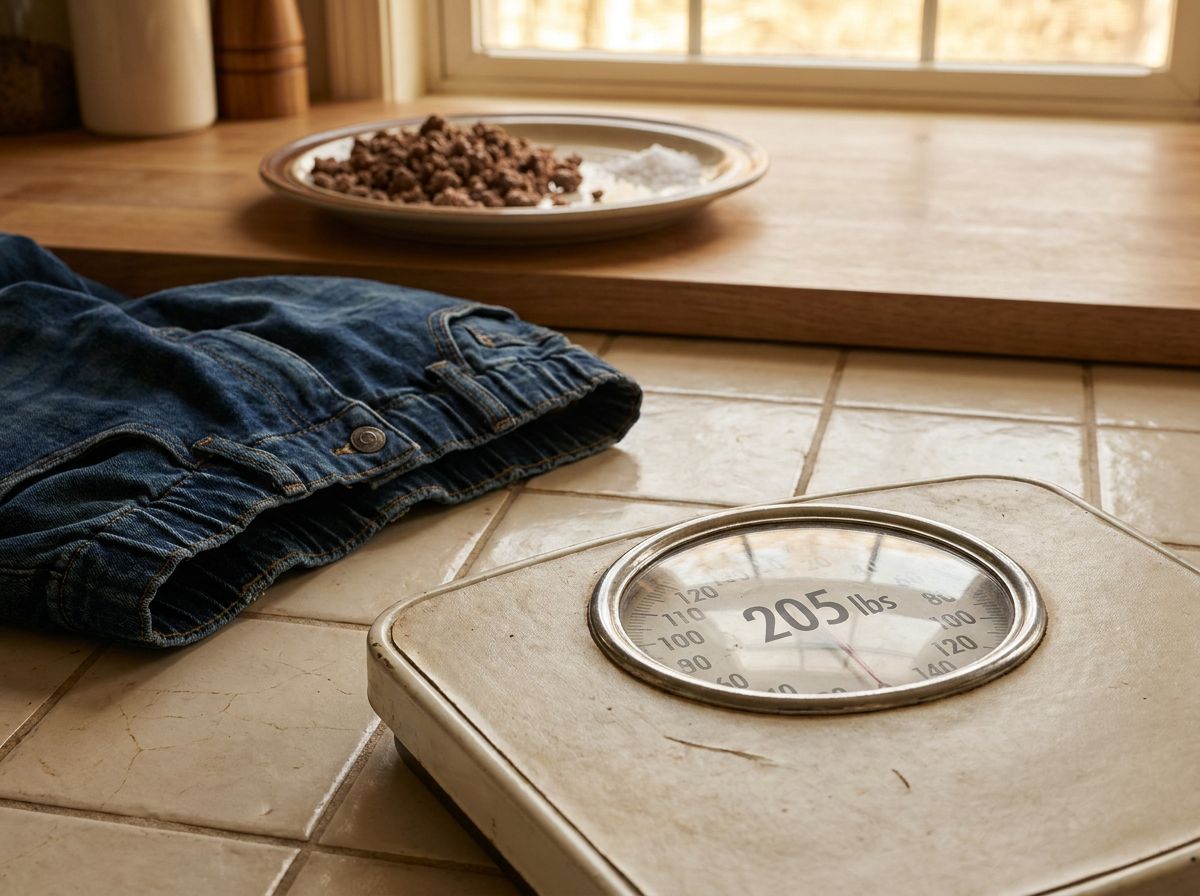
A 156-upvote transformation post hit Reddit this week. Male, 28 years old, went from 225 lbs to 205 lbs in two months on carnivore. Full body workouts three times a week, swimming twice, plus a supplement stack. The comments? "Nice work." "Keep it up." And then the real insight: "I recently changed my mindset from weight loss to FAT loss. This changed everything for me."
That comment is the whole story. Let me break down what actually happens in your body during those first two months, week by week, so you know what's normal and what's not.
Want to know what your own first two months could look like? Get your daily numbers, free, in about two minutes.
Week 1: The Glycogen Dump (4-8 lbs Lost)
This is the big, exciting, slightly misleading week. Most people drop 4-8 lbs in their first 7 days on carnivore. It feels incredible. Your pants feel looser. You're convinced this is the answer to everything.
Here's what's actually happening. When you stop eating carbohydrates, your body burns through its stored glycogen. Glycogen is just glucose stored in your muscles and liver. The key detail: every gram of glycogen is stored with 3-4 grams of water.
The average person stores about 400-500g of glycogen. That's roughly 1 lb of glycogen plus 3-4 lbs of water. Total: 4-5 lbs of "weight" that has nothing to do with fat loss.
New to carnivore? Start with our complete carnivore food list and our carnivore meal plan guide.
Don't panic when this number shows up on the scale. Don't celebrate either. It's water and glycogen. It comes back immediately if you eat carbs again. The real fat loss starts in week 2.
Week 2: Adaptation Begins (0-2 lbs Lost)
This is where people freak out. After the dramatic week 1 drop, the scale barely moves. Some people even gain a pound back. The forums fill with panic posts: "I gained weight on carnivore, what's wrong?"
Nothing is wrong. Your body is switching fuel systems. It's ramping up fat oxidation enzymes, adjusting hormone levels, and your water balance is fluctuating as electrolytes stabilize. We covered this adaptation process in detail in our week-by-week adaptation timeline.
This is also the week you might feel terrible. Headaches, fatigue, brain fog. That's your body adjusting to burning fat instead of glucose. Electrolytes help enormously here. Salt your food heavily and supplement magnesium before bed.
Weeks 3-4: Fat Loss Kicks In (1-2 lbs Per Week)
Now we're talking. By week 3, most people settle into a consistent 1-2 lbs per week of actual fat loss. This is the real number. Not water, not glycogen. Actual body fat coming off.
At a 500-calorie daily deficit (which happens naturally for most people on carnivore because protein is so satiating), you'll lose about 1 lb of fat per week. At a 1,000-calorie deficit, you'll lose about 2 lbs per week. Most carnivore dieters fall somewhere in between without deliberately counting calories.
The math: 3,500 calories equals roughly 1 lb of fat. If carnivore naturally reduces your daily intake by 500-800 calories (which studies on high-protein diets consistently show), you're looking at 1-1.5 lbs of pure fat loss per week.
Running total by week 4: 6-12 lbs on the scale, of which roughly 2-6 lbs is actual fat loss.
Weeks 5-6: The Recomposition Zone
This is where the Reddit commenter's advice matters most. "I stopped focusing on scale weight and now on measurements."
If you're lifting (like the poster who lost 20 lbs was), your body is doing two things at once: losing fat and building muscle. He even confirmed it in the comments: "With creatine and high protein, I'm developing muscle while burning fat. Scale weight doesn't change as rapidly as physique has."
Muscle is denser than fat. You can lose 2 lbs of fat and gain 1 lb of muscle in the same week. The scale shows only 1 lb lost, but your body composition changed by 3 lbs in the right direction.
This is why the scale becomes less useful over time. Better metrics:
- Waist measurement: Measure at the navel. This tracks visceral fat loss directly.
- Belt notches: Multiple Reddit users mentioned punching new holes in their belts. One person said they went from 2XL to medium.
- How clothes fit: The top post this week (236 upvotes) was literally about clothes not fitting anymore because of rapid weight loss.
- Progress photos: Weekly, same time of day, same lighting. More useful than any number.
Weeks 7-8: The Stall (and Why It's Normal)
Almost everyone hits a stall somewhere around weeks 6-8. The scale stops moving. Sometimes for 5-10 days straight. This is normal and it doesn't mean the diet stopped working.
Three things cause the stall:
1. Metabolic adaptation. Your body lost weight, so it needs fewer calories to function. Your new maintenance level is lower than it was 8 weeks ago. The deficit that was losing you 2 lbs/week might now only produce 0.5 lbs/week. We covered the full metabolic adaptation picture in our post on why carnivore weight loss stops.
2. Water retention fluctuations. Cortisol from stress, poor sleep, or intense exercise causes your body to hold water. You might be losing fat while simultaneously gaining water weight. This masks progress on the scale for days or even weeks, then releases all at once in a "whoosh" effect.
3. Recomposition. If you're training (and you should be), you're building muscle while losing fat. The scale might not move even though your body is changing dramatically underneath.
What to do during a stall: Nothing different. Keep eating carnivore. Keep training. Keep sleeping. The stall breaks on its own in 1-2 weeks for most people. Don't cut calories further. Don't panic. Don't quit.
The Full 2-Month Timeline (Realistic Expectations)
Here's what a realistic 2-month timeline looks like for someone starting at 200-230 lbs with moderate activity:
- Week 1: minus 4-8 lbs (mostly water/glycogen)
- Week 2: minus 0-2 lbs (adaptation, possible stall)
- Week 3: minus 1-2 lbs (real fat loss begins)
- Week 4: minus 1-2 lbs (consistent fat loss)
- Week 5: minus 1-2 lbs (recomposition starts if lifting)
- Week 6: minus 0.5-1.5 lbs (potential stall begins)
- Week 7: minus 0-1 lb (stall zone)
- Week 8: minus 1-2 lbs (stall breaks, "whoosh" possible)
Total: 10-22 lbs on the scale. Of that, roughly 6-14 lbs is actual fat loss. The rest is water and glycogen from week 1.
The Reddit poster lost 20 lbs in 2 months. That's on the higher end but entirely realistic for a 225 lb male who's also working out 5 days a week. His activity level accelerated the deficit significantly.
What the Scale Can't Tell You
Another commenter in that thread put it perfectly: "24 lbs in 1 month, though I know most of that is inflammation and water retention. I have still definitely lost a lot of fat too. Literally feels like my body is actively trying to return me to my optimum weight without me putting in much effort."
That's the experience for most people. Carnivore reduces systemic inflammation. That alone drops weight by reducing water retention in inflamed tissues. Your joints feel better, your face looks leaner, your rings fit differently. None of that shows up as "fat loss" on a DEXA scan, but it's real and it matters.
Track the scale if you want, but track these too:
- Energy levels (1-10 daily)
- Sleep quality
- Waist circumference (weekly)
- Strength in the gym (are your lifts going up?)
- How you feel in your clothes
The Bottom Line
Two months on carnivore is enough time to see real, measurable results. But the timeline isn't linear. Expect a big drop in week 1, a scary stall in week 2, steady progress in weeks 3-5, and another stall around weeks 6-7.
The protocol is simple. Eat meat. Lift weights. Sleep 7-8 hours. Salt your food. Measure your waist, not just your weight. Give it the full 60 days before you judge.
20 lbs in 2 months is absolutely possible. But even 10 lbs of real fat loss in that window is a massive win. Don't compare your week 3 to someone else's week 8.
Consistency beats perfection. Every single time.
I'm not a doctor. Everything here is based on what works in practice and what research supports. If you have health issues or take medications, check with someone qualified.
If you're a woman in your 40s or 50s, the timeline can look a little different. Sarah covers what changes on carnivore for women over 45. And if your goal is more than just the scale, check out recomp: losing fat and building muscle at the same time.