
This post may contain affiliate links. For educational purposes only — not medical advice. Details
They Spent Less on Groceries After Going Carnivore
I got an email last November from a couple in Manitoba. Jake and Mel. He was 275 lbs, she was 210 lbs. They'd tried keto together, counted calories, done Weight Watchers. Nothing stuck. Then Jake found carnivore on YouTube and convinced Mel to try it for 30 days.
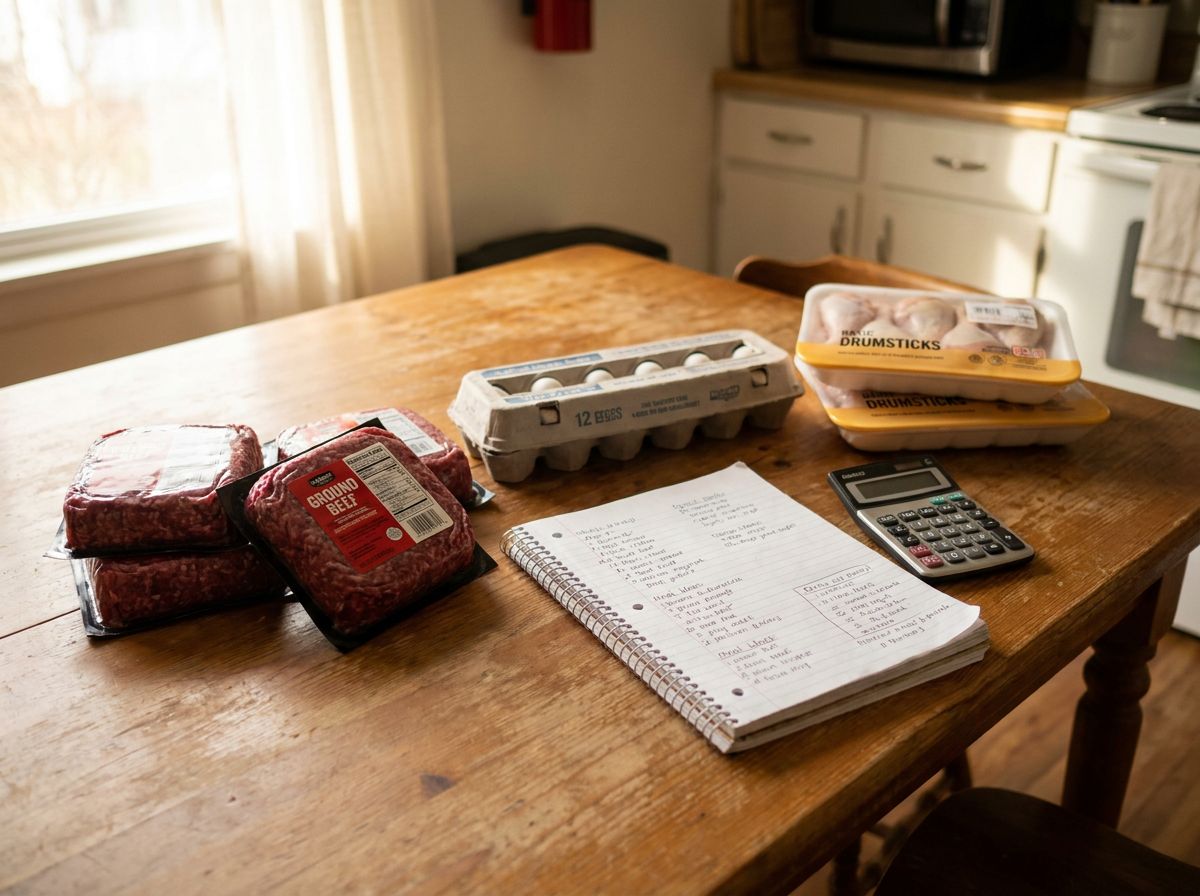
Ten months later, Jake is 215 lbs and Mel is 180 lbs. Combined weight loss: 90 lbs. Their monthly grocery bill: $200 for both of them. That's $100 per person, per month. $3.33 per person, per day.
People hear "carnivore" and assume it's expensive. Ribeyes every night. Fancy grass-fed this and pasture-raised that. Jake and Mel prove that's completely wrong. Here's exactly how they did it.
The Budget Before and After
Before carnivore, Jake and Mel spent roughly $650 per month on groceries. That included processed foods, snacks, bread, cereal, frozen pizzas, condiments, and produce that went bad before they ate it. Sound familiar?
| Category | Before (Monthly) | After (Monthly) |
|---|---|---|
| Meat and eggs | $120 | $165 |
| Processed foods/snacks | $180 | $0 |
| Bread, cereal, grains | $60 | $0 |
| Produce (50% wasted) | $90 | $0 |
| Condiments, sauces | $35 | $0 |
| Dairy (butter, cheese) | $40 | $25 |
| Beverages (juice, soda) | $55 | $0 |
| Restaurant/takeout | $70 | $10 |
| Total | $650 | $200 |
They didn't just save a little. They cut their food spending by $450 per month. That's $5,400 per year. And they lost 90 pounds doing it.
The Actual Grocery List
Here's what Jake and Mel buy every week, with actual prices from their local grocery store in Winnipeg:
- Ground beef 80/20 (5 lbs): $22.50. This is the foundation. Two people eating about 1.5 lbs of ground beef per day between them.
- Eggs (5 dozen): $12.50. They eat 4 to 6 eggs each per day. Eggs are the best cost-per-nutrient food on the planet.
- Pork shoulder or whole loin (3 lbs): $7.50. Slow-cooked pork shoulder for variety. Sometimes cut into chops.
- Butter (2 lbs): $6.00. Used for cooking and adding fat to leaner meals.
- Beef liver (1 lb, every other week): $1.50/week avg. Mel wasn't into it at first. Now she blends frozen liver into ground beef patties. Can't taste it.
- Salt and electrolytes: $0.50/week amortized.
Weekly total: about $50. Monthly total: $200.
That's it. No supplements except salt and magnesium citrate ($8 per month). No protein powders. No special products. Just meat, eggs, butter, and occasional organ meat.
The Meal Rotation That Kept Them Sane
One of the biggest reasons people quit carnivore is boredom. Jake and Mel solved this with a simple 4-day rotation:
Day 1: Smash burgers (ground beef patties with butter) and scrambled eggs. Simple, fast, satisfying.
Day 2: Slow-cooked pork shoulder with pan-fried eggs. They prep the pork in a slow cooker on Sunday and eat it through the week.
Day 3: Beef and liver patties (ground beef mixed with 20% liver) with fried eggs and butter.
Day 4: "Steak night." Once a week they buy a single pack of marked-down steaks from the clearance section. Sometimes it's sirloin, sometimes chuck. Whatever's cheap. This is their treat meal.
Then repeat. Four meals, rotated. Simple enough that neither of them has to think about it. Variable enough that they don't feel stuck. If you want more ideas for budget organ meat meal planning, that rotation pairs well with what Jake and Mel are doing.
Why Couples Have an Advantage
Eating carnivore as a couple is actually easier than doing it alone. Here's why the math works better:
Bulk buying makes sense. A 10 lb tube of ground beef from Costco runs about $38. That's enough for nearly a full week for two people. Buying for one person means smaller packages at higher per-pound prices. Two people hit the bulk discount threshold naturally.
Meal prep splits in half. Jake does the Sunday pork shoulder prep. Mel handles eggs in the morning. Neither person is doing all the cooking. When one partner has a rough day, the other picks up slack. Solo carnivore eaters don't have that safety net.
Accountability is built in. Mel told me that the hardest moment was week two, when she wanted chips. Jake was sitting across the table eating ground beef. She said, "I couldn't cheat because he'd see it, and he couldn't cheat because I'd see it." That's not willpower. That's a system.
The Weight Loss Timeline
Jake and Mel didn't lose 90 lbs in a straight line. Here's their actual progression:
- Month 1: Jake lost 15 lbs. Mel lost 8 lbs. Mostly water weight and inflammation. Both felt rough weeks 1 and 2. Classic electrolyte adjustment period.
- Months 2 to 4: Steady loss. About 2 lbs per week for Jake, 1.5 lbs per week for Mel. Jake was more active, so his rate was higher.
- Months 5 to 7: The stall. Jake plateaued at 230 for almost six weeks. Mel stalled at 190. This is where most people quit. They didn't change anything. Just kept eating the same rotation.
- Months 8 to 10: The whoosh. Jake dropped from 230 to 215. Mel went from 190 to 180. Bodies release fat in spurts, not smooth curves.
Total: Jake lost 60 lbs. Mel lost 30 lbs. Combined: 90 lbs. On $200 per month for food.
What They Stopped Buying (and Don't Miss)
This was the part that surprised them most. Mel made a list of everything they used to buy that they haven't touched in 10 months:
- Chips and crackers ($40/month)
- Cereal and granola ($25/month)
- Bread and buns ($15/month)
- Frozen meals ($35/month)
- Juice and soda ($55/month)
- Salad ingredients that went bad ($30/month)
- Condiments, dressings, sauces ($20/month)
That's $220 per month in food they were buying out of habit, not hunger. When you eat satiating animal protein and fat, the cravings for processed food disappear. Not through willpower. Through biology. Protein satiety is real, and it changes your grocery cart before you even realize it.
Can You Replicate This?
Yes. But you need to follow the same principles Jake and Mel used:
1. Ground beef is your base. Not steaks. Not fancy cuts. 80/20 ground beef at $4 to $5.50 per pound is the most cost-effective protein source in the carnivore world.
2. Eggs are non-negotiable. At $2.50 per dozen (or less on sale), eggs add protein, fat, and micronutrients at almost no cost. Don't skip them.
3. Buy pork for variety. Whole pork loins at $2 to $3 per pound. Cut your own chops. Slow cook the shoulders. Pork keeps your taste buds interested without destroying the budget.
4. Stop buying everything else. That's where the real savings come from. It's not that carnivore food is cheap. It's that everything you stop buying is expensive.
5. Track your spending for 30 days. I bet your current grocery bill is higher than you think. Jake and Mel were shocked when they added up their old receipts. $650 felt normal until they saw it on paper.
If you want a deeper breakdown of making this work on even less, I've written about the full cost-per-protein analysis for carnivore on $5 a day. Jake and Mel are proof the numbers hold up in the real world.
The Point
Carnivore isn't the expensive luxury diet people make it out to be. Two people lost 90 combined pounds over 10 months while spending $200 per month total on groceries. That's less than most couples spend on takeout alone.
Protocol beats willpower. Consistency beats perfection. And the math doesn't lie.
I'm not a doctor. I coach nutrition for performance, and I know what works in practice. But I'm not your physician. If you have health conditions or take medications, check with someone qualified before making changes. Everything here reflects real results from real people. Your situation is unique, and your results may differ.