
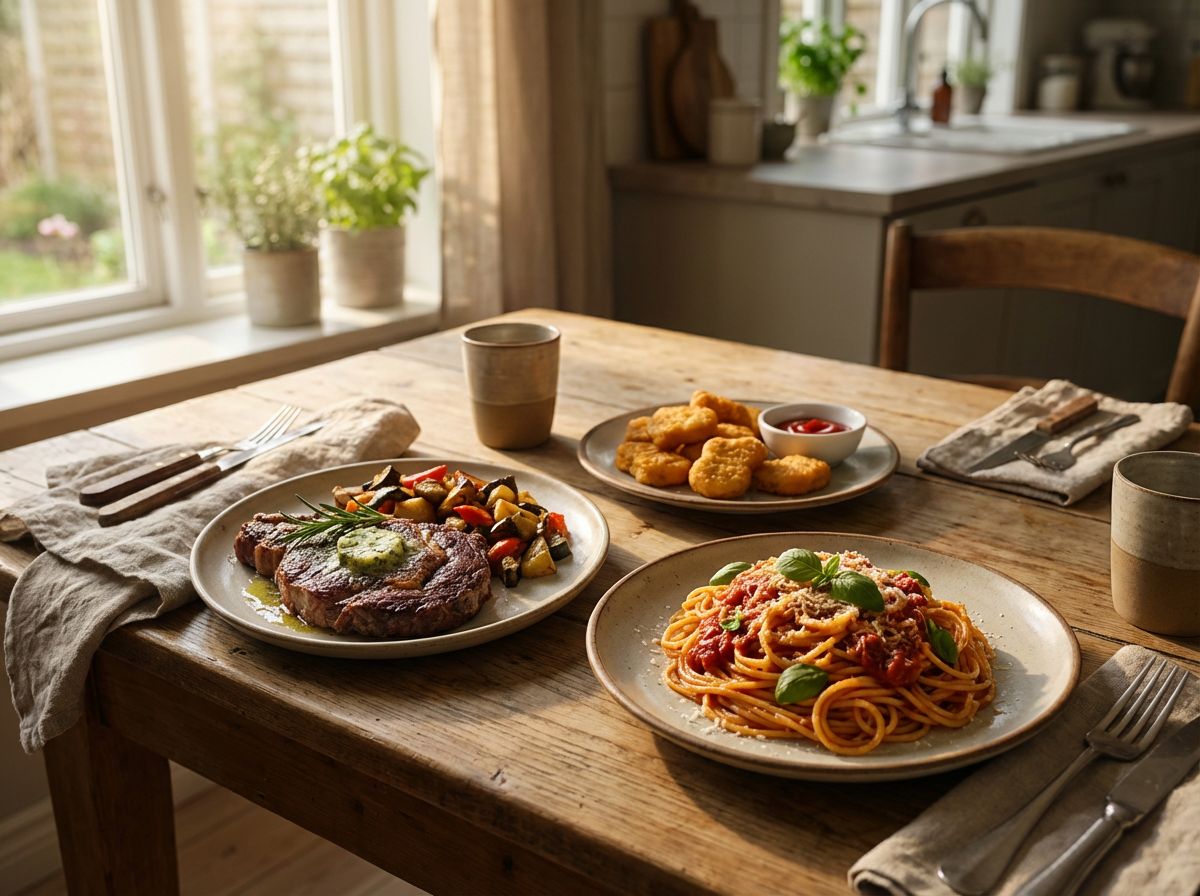
Real talk: The carnivore community is out here acting like you have to choose between eating carnivore and having a functional family. People are asking, "Do I make my kids eat this way?" or "How do I cook two separate meals every night?"
Here's the vibe: You don't have to force your family to go carnivore, and you don't have to become a short-order cook. There's a middle path where you eat your way, they eat theirs, and nobody loses their mind. Let me show you exactly how to make family dinners work without food battles or burnout.
The Core Problem
The community is saying the hardest part of family carnivore isn't the food—it's the logistics and social dynamics. You're dealing with:
- Different preferences: You want steak, your spouse wants pasta, your kid wants chicken nuggets
- Meal prep burden: Cooking multiple meals every night isn't sustainable
- Social pressure: Kids notice when you eat differently and ask questions
- Partner skepticism: Your spouse thinks you're doing some weird internet diet
- Kid resistance: Your 7-year-old is not giving up pizza, no matter how much you talk about metabolic health
The mistake most people make is trying to convert the whole family or cooking completely separate meals. Both approaches lead to conflict and exhaustion. The smart move is the protein-first hybrid approach.
The Protein-First Family Strategy
Here's the framework that works: Cook one protein for everyone, let others add sides.
This resonates because it's low-friction. You're not making separate meals, and you're not forcing anyone to eat your way. You're just centering dinner around protein and letting people customize from there.
How It Works
Your plate: Protein + butter/fat, nothing else
Their plates: Same protein + whatever sides they want (rice, potatoes, vegetables, bread)
Example dinners:
- Monday: Grilled chicken thighs. You eat 4 thighs with butter. They eat 1-2 thighs with rice and broccoli.
- Tuesday: Ground beef. You eat seasoned beef patties. They eat the same beef in tacos with tortillas and toppings.
- Wednesday: Ribeye steak. You eat ribeye with salt. They eat ribeye with baked potato and salad.
- Thursday: Pork chops. You eat pork chops with butter. They eat pork chops with mashed potatoes and green beans.
- Friday: Salmon. You eat salmon with butter. They eat salmon with pasta and asparagus.
You're cooking one protein. They're adding their own sides (which can be simple: microwave rice, frozen veggies, toast). Nobody's making two full meals. Nobody's fighting about food.
The Meal Prep System
To make this sustainable, you need a system that doesn't require cooking from scratch every night.
Weekend Batch Prep (2 Hours)
Sunday morning routine:
- Grill 5 pounds of chicken thighs (plain, salt only)
- Cook 3 pounds of ground beef (plain or seasoned)
- Bake a whole tray of bacon
- Hard-boil a dozen eggs (if you eat eggs)
Store everything in glass containers. Now you have protein ready for the week. On weeknights, you just reheat your portion while the family adds their sides.
Their side options (keep it simple):
- Microwave rice pouches (90 seconds)
- Frozen vegetables (steam in bag)
- Instant mashed potatoes
- Toast or rolls
- Pasta (boil while reheating protein)
You're not gourmet-cooking sides. You're providing simple carb options they can prepare themselves (or you can throw together in 5 minutes). This is about sustainability, not Pinterest-worthy meals.
Weeknight Assembly (15 Minutes)
Your dinner:
- Reheat pre-cooked protein (microwave or skillet)
- Add butter or tallow
- Plate and eat
Their dinner:
- Reheat same protein
- Microwave rice or boil pasta (5-10 minutes)
- Steam frozen veggies or toast bread
- Plate and eat
Total time: 15 minutes. Total number of separate meals cooked: Zero. You're assembling plates from pre-prepped components, not cooking from scratch every night.
The Kid Strategy
Kids are the hardest variable because they're picky, opinionated, and socially aware. Here's how to handle it without creating food battles or emotional damage.
Rule 1: Don't Force It
Do NOT make your kids eat carnivore unless they have serious health issues that require it. Forcing restrictive diets on kids creates disordered eating patterns and resentment. This is resonating in the community because too many parents are making carnivore a family religion instead of a personal choice.
Your kid can eat pizza, pasta, fruit, and whatever else they want. You're modeling a way of eating, not imposing it. If they get curious and want to try your food, great. If not, also great.
Rule 2: Protein-First for Everyone
Even if your kids eat carbs, you can teach them to prioritize protein without being preachy about it.
Instead of: "Carbs are poison, you shouldn't eat that bread."
Say: "Eat your chicken first, then you can have more bread if you're still hungry."
This builds a protein-first habit without demonizing other foods. Most kids will fill up on protein and naturally eat fewer carbs, but they don't feel restricted.
Rule 3: Make Carnivore Look Normal
Kids are watching how you eat, and if you act like carnivore is weird or extreme, they'll see it that way too. Make it boring and normal.
When they ask why you don't eat sides:
- Don't say: "Because plants are toxic and I'm healing my gut."
- Do say: "I just like eating this way. Makes me feel good."
When they ask if they have to eat like you:
- Don't say: "Eventually you will when you understand health."
- Do say: "Nope, you eat what works for you. I eat what works for me."
Keep it casual. The less drama you create around food, the less resistance you'll get. Kids are way more accepting of differences when adults don't make it a big deal.
Rule 4: Teach Without Preaching
You can expose kids to carnivore principles without turning into a diet evangelist.
Good: "I notice I have more energy when I eat steak for breakfast instead of cereal."
Bad: "Cereal is garbage food designed to make you sick."
Good: "Want to try a bite of my ribeye? It's really good."
Bad: "You should eat this instead of that junk you're eating."
Model the behavior, share observations, offer bites. Don't lecture, shame, or restrict. Kids are more likely to adopt habits they see working than habits they're forced into.
The Partner Strategy
Your spouse or partner is the other key variable. If they're skeptical or unsupportive, family meals become a battleground. Here's how to keep it smooth.
Strategy 1: Make It Low-Friction
The number one complaint from partners is: "I don't want to cook two separate meals." Solve this by not asking them to.
If you're doing the cooking, use the protein-first system above. If they're cooking, communicate clearly:
"Can you grill chicken tonight? I'll eat it plain, you guys can add whatever sides you want. I'll handle my portion."
Make carnivore your problem, not theirs. Don't expect them to cater to your diet. Handle your own food and let them eat normally.
Strategy 2: Don't Evangelize at Dinner
Nothing kills family dinner faster than diet lectures. If you're constantly talking about seed oils, insulin, or inflammation, your partner will tune out and resent it.
Topics to avoid at dinner:
- Why their food is unhealthy
- Latest carnivore YouTube video you watched
- How much better you feel since quitting plants
- Studies about carbs and disease
Topics to focus on instead:
- Literally anything else (work, kids, plans, life)
Dinner is for connection, not conversion. Eat your food, let them eat theirs, talk about normal stuff. The more you make carnivore invisible, the less friction it creates.
Strategy 3: Let Results Speak
If carnivore is working for you, your partner will notice. Better energy, weight loss, improved mood, better sleep—these are visible changes that don't require explanation.
When they notice and ask, that's when you share. But let them come to you. Unsolicited health advice is the fastest way to create resentment.
Social Situations (Birthday Parties, Holidays, Guests)
Family meals get complicated during social events. Here's how to navigate without making it weird.
Birthday Parties (Your Kid's)
Don't make your kid's birthday about your diet. Serve normal party food (pizza, cake, etc.) and eat beforehand or bring your own protein to grill.
Kids remember when their parents made their birthday weird. Don't be that parent. Eat your steak at home, show up to the party, and participate without making a thing out of it.
Holidays (Extended Family)
Holidays are protein-heavy by default (turkey, ham, roast beef), so this is easier than you think.
Your strategy:
- Load up on turkey/ham/roast
- Skip the sides (or take tiny portions to avoid questions)
- Bring a meat-heavy dish to contribute (bacon-wrapped something, charcuterie, etc.)
Nobody notices you skipping mashed potatoes if your plate is full of turkey. And if they ask, keep it simple: "I'm just really hungry for the turkey tonight."
Guests Coming Over
When you're hosting, the protein-first strategy works perfectly. Grill steaks or roast a chicken, provide normal sides for guests, everyone's happy.
Guests don't care that you're not eating sides. They care that there's good food and they're not going hungry. Focus on high-quality protein and simple sides, and nobody will question your choices.
The Grocery Strategy
Running a mixed household means buying both carnivore staples and normal groceries. Here's how to keep it organized and affordable.
Your Staples (Carnivore)
- Ground beef (80/20, buy in bulk)
- Chicken thighs (cheaper than breasts, more fat)
- Eggs (if you eat them)
- Bacon
- Butter or tallow
- Occasional ribeye or other cuts (when on sale)
Their Staples (Normal)
- Rice (cheap, easy, shelf-stable)
- Pasta
- Bread
- Frozen vegetables
- Fruit
- Snacks (crackers, chips, whatever)
Keep both stocked. Don't try to eliminate their food or "accidentally" run out of carbs. That creates conflict. Just buy what everyone needs and let people eat their way.
What Not to Do (Common Mistakes)
Here's what the community is saying doesn't work:
- Forcing the family to go carnivore: Creates resentment and rebellion
- Cooking two completely separate meals every night: Leads to burnout and quitting
- Lecturing at every meal: Makes everyone tune you out
- Restricting kids' food: Causes disordered eating patterns
- Making carnivore the center of family identity: It's a diet, not a religion
The families that make this work long-term are the ones who keep it low-drama. Carnivore is just how one person eats, not a household mandate.
The Bottom Line
You can do carnivore while the rest of your family eats normally. The key is the protein-first strategy: cook one protein for everyone, let others add sides. Batch-prep protein on weekends, assemble plates on weeknights. Don't force kids to eat your way, don't evangelize at dinner, and make carnivore your problem, not theirs.
This is resonating because most carnivore advice assumes you live alone or have a fully converted household. Reality is messier. Your spouse is skeptical, your kids want pizza, and you don't have time to cook separate meals every night.
The solution isn't conversion or martyrdom—it's a low-friction system where everyone eats their way without conflict. Model the behavior, let results speak, and keep food drama out of family time. You'll stick with carnivore longer, and your family won't resent you for it.
And if you're navigating social situations outside the home, the same principles apply: eat your way, let others eat theirs, and don't make it weird.