
This post may contain affiliate links. For educational purposes only, not medical advice. Details

Most people who try carnivore don't make it past week three. I've watched this pattern play out for years, in coaching clients, in Reddit threads, in my own friends who said they'd give it 90 days and tapped out at day 19. It's almost always the same story. The energy hasn't kicked in yet, the scale is being weird, their mom is asking if they're going to get scurvy, and they feel like garbage. So they quit, three days before the thing they came for actually shows up.
Why week three is the cliff
Week three is where physiology and psychology collide. Your body is in the messy middle of a metabolic rebuild, and your brain is in the messy middle of social pressure, identity friction, and unmet expectations. Both are peaking at the same time. That's not a coincidence. That's the design of the curve.
On the physiology side, you're losing a lot of water and sodium in the first two to three weeks as insulin drops. That sodium loss is the real driver of keto flu. Headaches, lightheadedness when you stand up, leg cramps at 2am, a heart that randomly decides to do drum solos. None of that is your body rejecting meat. It's your kidneys dumping electrolytes faster than you're replacing them.
At the same time, your fat-burning machinery isn't fully online yet. Your mitochondria are upgrading their software, but the install isn't done. So you're somewhere between two fuel systems and not great at either. People describe this as feeling foggy, weak in the gym, and weirdly emotional. That's normal. It's also temporary.
And then there's the social piece. By week three, you've turned down enough birthday cake and explained yourself enough times that it starts to feel exhausting. Your spouse is sick of cooking two dinners. Your coworkers think you've joined a cult. You're not getting external validation, and the internal validation (energy, clarity, body composition) hasn't shown up loud enough to drown out the noise. So the quiet voice that says "maybe this is dumb" gets louder.
The 3-phase mental model
Here's the framework I wish someone had given me when I started. Three phases, each with a different feel and a different job.
Phase 1: Adaptation (week 1 to 2)
This is the honeymoon and the hangover, often in the same day. You're eating ribeyes and feeling a little smug about it. Then around day 4 or 5, the keto flu hits. You're tired, headachy, and your workout in the gym feels like you're moving through wet concrete. Your job in this phase is simple: salt aggressively, drink to thirst, and don't trust the scale (you're dropping water weight, not fat).
Phase 2: Detox and rebuild (week 2 to 6)
This is the longest stretch and the one most people don't make it through. Your body is rebuilding hormones, repairing gut lining, and recalibrating insulin sensitivity. You might have weird symptoms that come and go. Skin breakouts. Bowel habits that change every few days. Mood swings. Sleep that's deep one night and broken the next. None of this is failure. It's renovation. Your job here is to stay the course and keep collecting data, because the day-to-day feels chaotic but the trend line is going somewhere good.
Phase 3: Fat-adapted (week 6 and beyond)
This is what you came for. Steady energy from morning to night without snacks. Hunger that shows up on a real schedule and goes away after meals. Mental clarity that feels like someone wiped the smudge off the window. Workouts that come back, often stronger than before. Sleep that's solid. This is when most people stop white-knuckling and start actually liking how they feel. But you have to get here first.
What to actually do during week three
Salt like you mean it. Most people on carnivore need three to five grams of sodium per day, sometimes more if you're active or in a hot climate. Salt your meat heavily. Add a pinch to your water. If you're getting cramps or feeling lightheaded, you're under-salting. I keep LMNT packets in my bag for the days I know I'm going to be moving a lot or sweating, because chasing electrolytes after the fact is harder than getting ahead of them.
Eat fattier cuts. If you're stuck on lean ground beef and chicken breast, you're going to feel terrible. Your body needs fat for fuel right now. Ribeye, chuck, ground beef at 80/20 or fattier, fatty pork, lamb, eggs cooked in butter. The protein-to-fat ratio matters. Aim for roughly equal grams of fat to grams of protein during adaptation.
Sleep like it's your job. Adaptation is when your body does the rebuild work. Cut the late nights. Get to bed earlier than you think you need to. The brain fog clears faster when you sleep more.
Stop weighing yourself daily. The scale in week three is going to lie to you. Water shifts, hormonal shifts, and meat being denser than the food you used to eat will make the number do strange things. Weigh weekly at most, or skip it entirely and use how your clothes fit.
Find one person who gets it. One. Doesn't have to be a community. A friend, a forum, a coach. Someone who isn't going to ask if you're worried about your kidneys every time you mention it. Isolation is what kills most people in week three, not the food.
Why tracking changes the game
Here's the thing nobody tells you about week three: feelings lie. You feel like nothing's working. You feel like you're failing. You feel like the headache is never going away. But if you've been writing down your meat, your fat, your water, your salt, your sleep, your symptoms on a 0-10 scale, your energy, your mood, every single day, you have data that disagrees with the feelings.
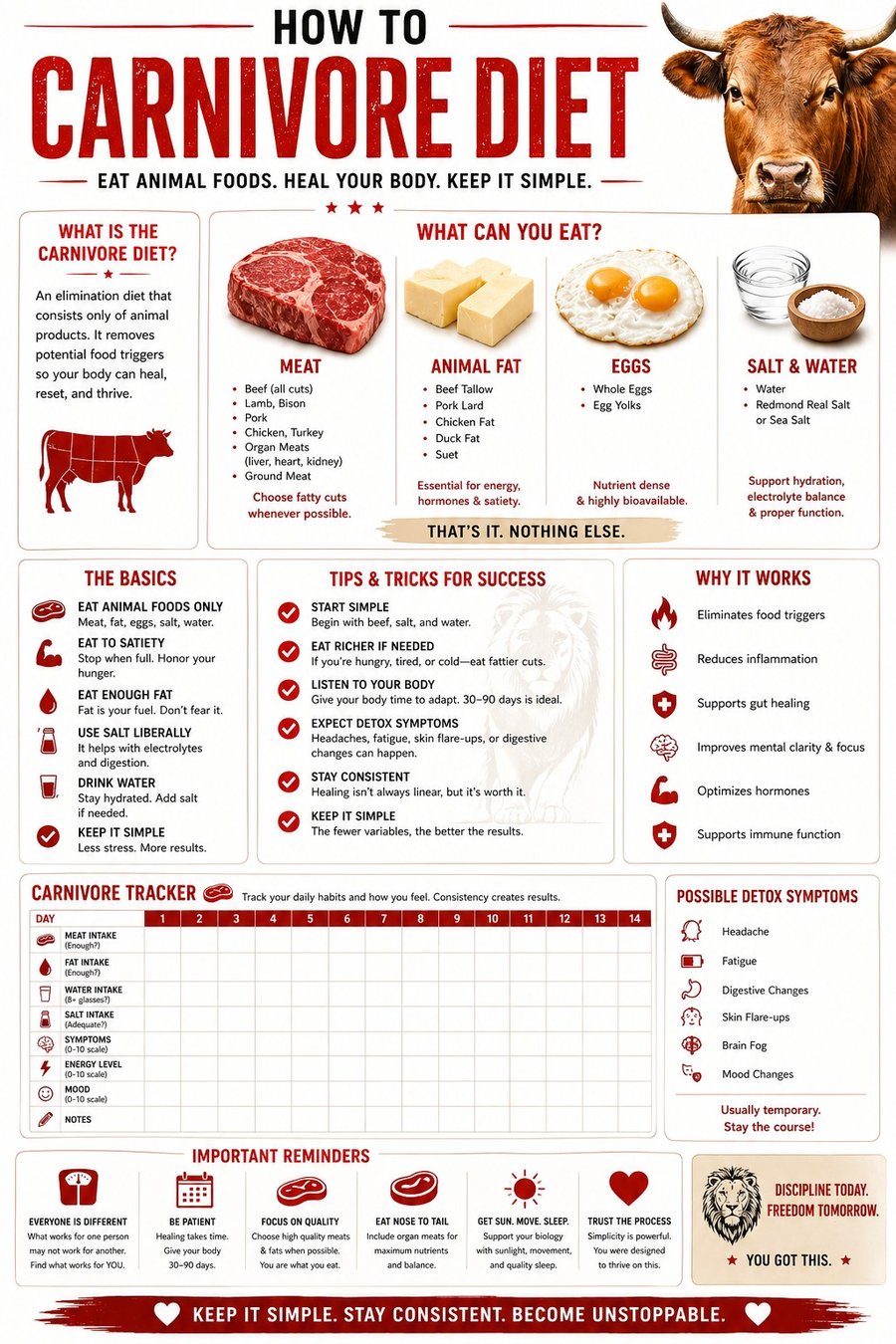
You can look back at day 8 and see your headache was a 7. Today it's a 3. You feel like nothing's changing, but the number on the page says you're 4 points better. That's the difference between people who quit and people who push through. Not willpower. Not discipline. Visibility.
I tell every client to track for the first 30 days, no exceptions. After that you can stop if you want. But during the messy middle, when your brain is making up stories about how this isn't working, you need a piece of paper that tells you the truth.
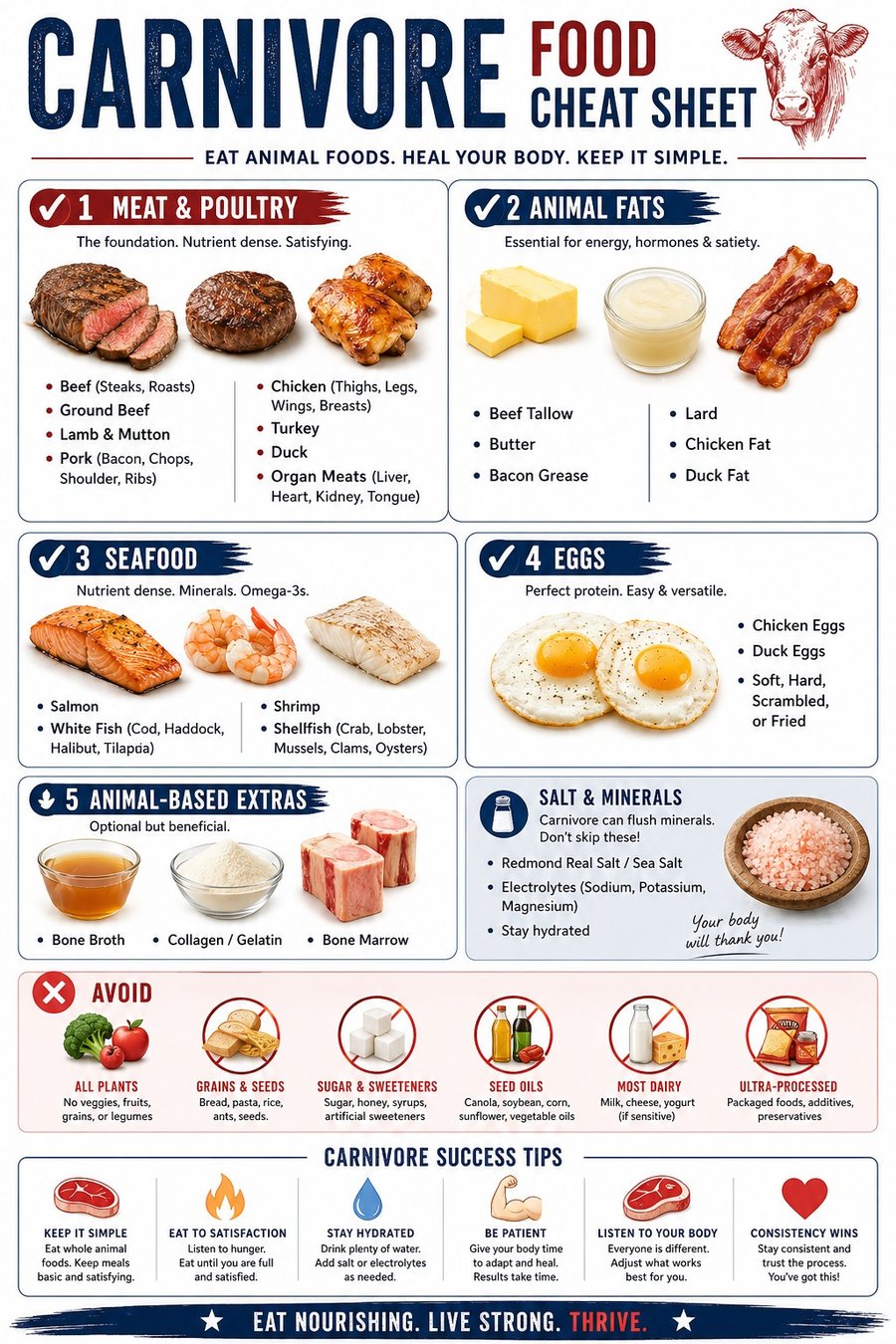
The other thing tracking solves is the "what do I eat" decision fatigue. By week three, a lot of people have eaten ribeye 11 times and they're staring into the fridge wondering if they're allowed to have eggs. (You are.) Having a one-page reference for what's a yes, what's a maybe, and what's a no kills the overthinking.
What I made you
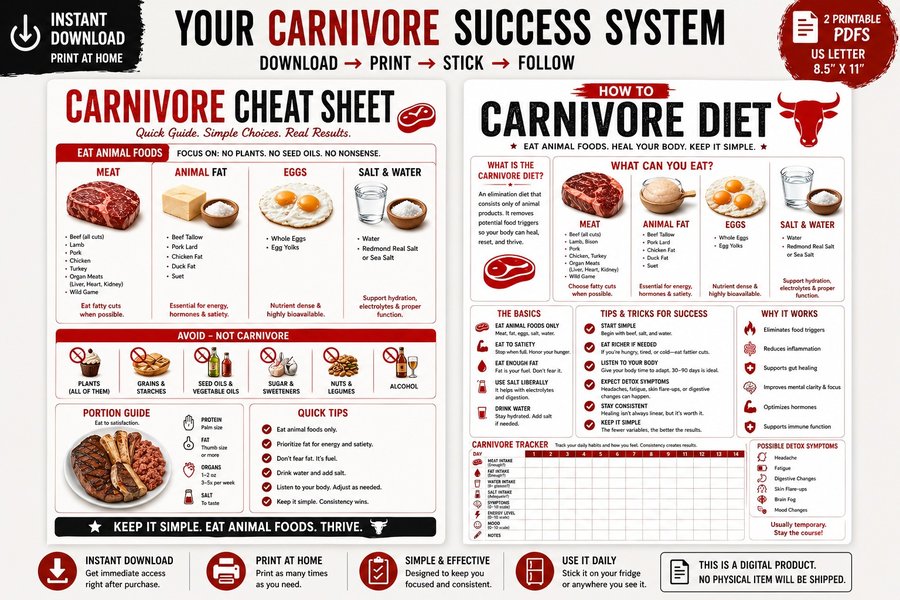
I built a couple of printables for this exact problem because I was tired of typing the same answers into Reddit threads at 11pm. The cheat sheet is for the daily food decisions, the kind you stick on the fridge so you stop second-guessing whether bacon counts. The how-to and 14-day tracker is the one that gets you through the messy middle: a clear roadmap of what each phase looks like, plus daily check-in boxes for meat, fat, water, salt, and 0-10 scales for your symptoms, energy, and mood. If you want both, the bundle is $7.99 and is the one I'd point a friend at first.
You're not failing in week three. You're in the middle of a renovation, and renovations are loud and messy and look worse before they look better. Keep going.
I'm not a doctor. I've researched this deeply and worked with many people, but I'm not your doctor. If you have health conditions, take medications, or need specific guidance, talk to someone who knows your full medical picture. Everything I write is educational based on research and what I've seen work. Your situation might be different.