
This post may contain affiliate links. For educational purposes only, not medical advice. Details
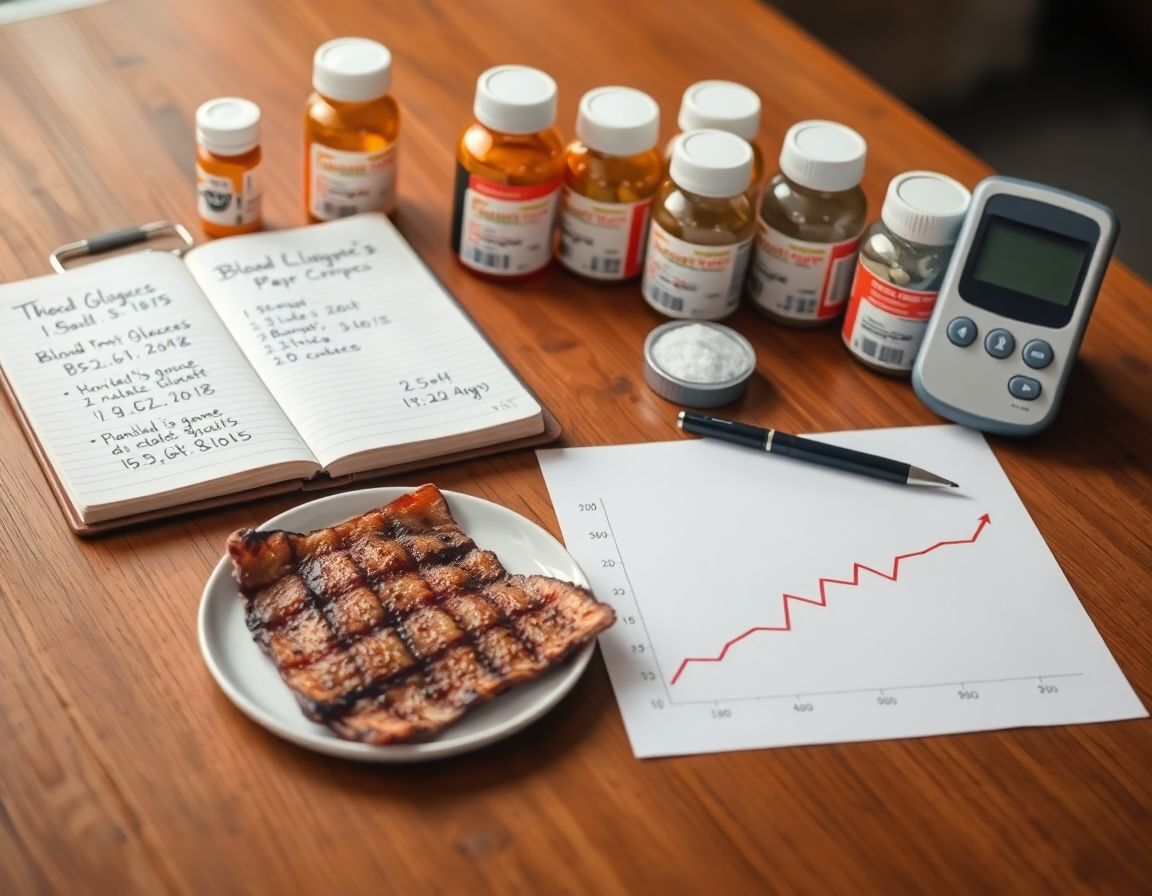
I want to walk you through what diabetes reversal on carnivore actually looks like in the first 60 days. Not the social media version. Not the testimonial that says "I cured my diabetes in a week and threw away all my meds." The grounded version. The one that includes the bloodwork, the medication adjustments, the things that get worse before they get better, and the ranges your doctor will actually want to see.
To make this concrete, I'm going to walk through a composite case. Not a specific real person. A picture built from patterns I've seen repeatedly when people with type 2 diabetes commit to carnivore with proper medical oversight. Call him David. Mid 50s, diagnosed type 2 four years ago, on metformin and a low-dose SGLT2 inhibitor.
The Starting Numbers
David's labs at day zero look like this. HbA1c 7.8%. Fasting glucose averaging 165 mg/dL on his home monitor. Fasting insulin 22 µIU/mL. Triglycerides 245 mg/dL. HDL 34 mg/dL. He's about 55 pounds overweight, mostly visceral. His blood pressure runs 142/88.
This is a very common starting profile. He's not catastrophic. He's not in DKA territory. He's a textbook insulin-resistant type 2 diabetic with metabolic syndrome features. The kind of person who, if nothing changes, ends up on more medications every two years and probably on insulin within five.
His doctor is cautiously supportive of dietary change. They agree to weekly check-ins for the first month, then biweekly. They're going to watch for hypoglycemia, blood pressure changes, and how his medications need to titrate.
Days One Through Seven
The first week is the most medically active week of the whole protocol. David's glucose drops fast. By day three, his fasting readings are running 110 to 125. By day six, he's seeing 95 to 105 in the morning.
This is where the SGLT2 inhibitor becomes a problem. SGLT2s work by dumping glucose through the kidneys. With dietary glucose suddenly minimal, they can drive him toward euglycemic ketoacidosis, which is dangerous and easy to miss because the glucose looks fine. His doctor pulls the SGLT2 on day four. Metformin stays for now.
His blood pressure also moves. By day seven, he's averaging 128/82. His doctor doesn't change the BP medication yet but flags it for the next visit.
Symptoms wise, he feels rough. Fatigue, headaches, mild lightheadedness when he stands. Classic adaptation. Salt and water help. He's eating ribeye, ground beef, eggs, and butter. Nothing fancy.
Days Eight Through Thirty
By the end of week two, David's fasting glucose has stabilized in the 88 to 98 range. His post-meal glucose, which used to spike to 180 or 190, is now running 105 to 115 ninety minutes after eating. The amplitude of his daily glucose swings has collapsed. This is one of the most important early signs and often missed.
His weight is down 11 pounds. Most of that is water from glycogen depletion and reduced sodium retention. The actual fat loss starts showing more clearly in week three and four.
His doctor cuts metformin in half at the day-21 visit. By day 30, he's off metformin entirely. His fasting insulin has dropped to 11 µIU/mL. That number is doing more work than people realize. Insulin coming down is what insulin resistance reversal actually looks like at the lab level.
Triglycerides have already dropped to 148. That's a hallmark of carbohydrate restriction and one of the fastest-moving lipid markers. HDL is creeping up, now 38.
Days Thirty-One Through Sixty
The second month is less dramatic on paper but more important physiologically. The body is rebuilding mitochondrial function, recalibrating insulin signaling, and burning through stored visceral fat.
By day 45, David's fasting glucose is consistently in the mid 80s. Post-meal, he barely registers a rise. His CGM trace, if he wears one, looks remarkably flat. This is what metabolic flexibility starting to return looks like.
At day 60, he gets his first post-baseline labs. HbA1c is now 5.9%. That's not yet "non-diabetic" by ADA criteria, which kicks in below 5.7%, but it's the difference between active diabetes and pre-diabetic range. Importantly, HbA1c lags. It reflects average blood sugar over the previous three months, so even at day 60 the number still includes a chunk of his pre-carnivore baseline. Run it again at day 90 and it's almost certainly under 5.7%.
Fasting insulin is now 7. Triglycerides 92. HDL 48. The triglyceride to HDL ratio, which is one of the better proxies for insulin resistance, has gone from over 7 to under 2. That shift alone tells you most of the story.
He's down 28 pounds. Blood pressure averaging 118/76, off his BP medication entirely as of day 50. He has more energy than he's had in fifteen years.
What "Reversal" Actually Means
The word reversal gets used loosely in carnivore circles, and I want to be precise. David's diabetes hasn't been cured. His genetic predisposition is the same. His pancreatic beta cells, depending on how long he was diabetic and how damaged they got, may or may not have fully recovered.
What's happened is that he's no longer diabetic in any clinical sense as long as he keeps eating this way. His glucose handling, insulin sensitivity, and metabolic markers all sit in healthy ranges. Per the Virta Health published clinical work, that's the working definition of reversal that most low-carb clinicians use. The diet manages the disease so completely that the disease is no longer expressing itself.
Stop the diet, and the disease can come back, often within weeks. This isn't a one-time intervention. It's an ongoing way of eating that keeps the underlying metabolic problem in remission.
The Virta studies have published 5-year follow-up data showing sustained HbA1c reductions in patients who stayed adherent. That's the longest high-quality data we have on this approach.
What Doctors Should Be Watching
If you're working with someone going through this transition, the danger zones are mostly medication-related. SGLT2 inhibitors should usually come off early. Sulfonylureas, which directly stimulate insulin release, can cause hypoglycemia within days and need rapid titration. Insulin itself, especially long-acting, requires careful, often daily, dose reduction during weeks one and two.
Blood pressure medications often need cutting too, sometimes within the first month. Statins and thyroid medications usually stay on as-is during the early weeks. Cholesterol numbers will move, sometimes dramatically, and that conversation needs its own visit.
I wrote a deeper breakdown of what to actually watch for on lipid panels in my piece on the cholesterol question if you want to go deeper there.
The Honest Caveats
Not everyone reverses this cleanly. Late-stage type 2 with significant beta cell damage takes longer and may not normalize without ongoing low-carb intake plus medication support. Type 1 diabetes is a completely different disease and carnivore can help with insulin needs but cannot reverse it. Anyone with a history of pancreatitis, kidney disease, or eating disorders needs individualized guidance, not a generic protocol.
And the social side of this is hard. Sixty days of strict carnivore while also navigating medication changes, family meals, and your doctor's skepticism is a lot. The people who do best almost always have either a supportive practitioner or a community of others doing the same thing.
A Note Before You Go
If you're taking medications or have been diagnosed with any medical condition, you need individualized medical oversight. Don't make changes without consulting your doctor. Diabetes medication adjustments during dietary change are real medical events, not lifestyle tweaks. The composite case above is illustrative. Your situation, your medications, and your bloodwork need a real human clinician walking through them with you.
I'm not a doctor. Everything I've written here is educational based on the published low-carb diabetes research and patterns I've seen in the carnivore community. Your numbers, your timeline, and your medication needs may look very different.