
This post may contain affiliate links. For educational purposes only, not medical advice. Details
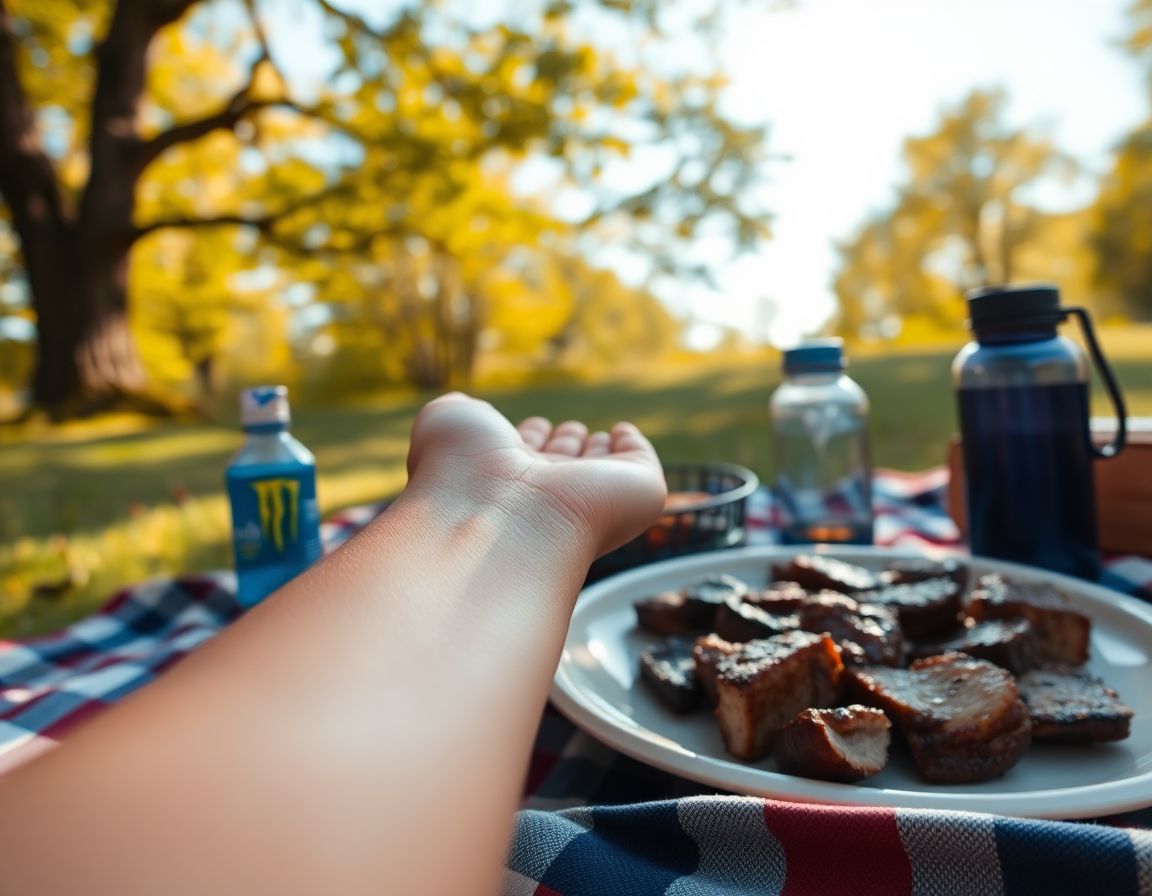
I keep seeing the same thread on Reddit. Someone posts that they spent six hours at the lake without sunscreen and didn't burn. Or that they used to fry like a lobster every summer and this year, after a year on carnivore, they came back tan instead of pink. The comments fill up fast. Me too. Same thing. I noticed this last summer.
It's one of those carnivore reports that sounds borderline ridiculous when you hear it the first time. Diet shouldn't change how your skin handles UV light. Or should it? I went down this rabbit hole because I noticed it myself, and I want to walk through what's anecdote, what's plausible mechanism, and what's still very much an open question.
What People Are Actually Reporting
The pattern is fairly consistent across the carnivore communities I follow. People report three rough categories of skin change after six months or more on the diet.
First, longer time before they burn. Folks who used to need sunscreen at thirty minutes are saying they can sit in direct sun for two or three hours without going pink. Second, less severe burns when they do burn. The same exposure that used to cause peeling and blistering now produces a mild flush that fades overnight. Third, faster tanning. Skin browns instead of reddening, and the tan holds longer.
None of this is data in any meaningful sense. It's self-reported, biased toward people who like the result, and there's no way to control for sunscreen habits, time of year, or where the person actually lives now versus before. People who move from Boston to Phoenix and adopt carnivore at the same time are going to attribute their skin changes to the wrong variable.
That said, when enough people report the same thing across enough years, it's worth asking whether there's a plausible mechanism. So let's look.
The PUFA Hypothesis
The most discussed theory centers on polyunsaturated fatty acids, the PUFAs. These are the fats found heavily in seed oils like soybean, corn, sunflower, safflower, and canola. They're also in nuts, seeds, and most processed foods.
PUFAs are chemically unstable. They're prone to oxidation, especially when exposed to heat, light, and oxygen. The double bonds in their structure are reactive in ways that saturated fats aren't.
Here's where it gets interesting. Your skin's outer layer reflects the fat composition of your diet. If you've eaten heavy seed oil for years, the lipids in your skin cell membranes are loaded with those same PUFAs. When UV radiation hits the skin, it can drive oxidation reactions in those unstable fats, generating reactive oxygen species and damaging cell structures. Some researchers, including Dr. Cate Shanahan in her book "Deep Nutrition," have argued that this dietary fat profile in the skin is one reason modern populations sunburn more readily than ancestral populations did.
There's published rodent research showing that diets high in PUFAs increase UV-induced skin damage and skin cancer risk compared to diets high in saturated fat. Studies by Dr. Homer Black at Baylor College of Medicine documented this back in the 1990s. The translation to humans is less clear, but the mechanism is at least biologically plausible.
The Omega-3 to Omega-6 Ratio
Within the PUFA family, the balance between omega-3 and omega-6 matters. The standard American diet skews heavily toward omega-6, often at ratios of 15:1 or 20:1 against omega-3. Beef, especially grass-fed, shifts that ratio. Salmon and other fatty fish push it further.
Some studies, including work published in the American Journal of Clinical Nutrition, have found that higher omega-3 intake reduces erythemal response to UV exposure. Translated, that means people with more omega-3 in their diet take longer to turn red. The proposed mechanism involves reduced production of inflammatory prostaglandins that drive the sunburn response.
This one has stronger evidence behind it than the broad PUFA hypothesis, though the effect sizes in the studies are modest, not dramatic.
Melanin and Vitamin D
There's also a less-discussed angle around vitamin D status. People on carnivore who include liver and egg yolks regularly tend to have higher baseline vitamin D, especially if they're also getting sun. Vitamin D plays a role in skin cell function and may affect how the skin handles UV stress, though the direct link to sunburn resistance is murkier than the PUFA story.
Melanin production itself doesn't change based on diet in any well-documented way. Your genetic ceiling for tanning is what it is. But the inflammatory response that follows UV exposure, which is what drives the visible burn, may be modulated by diet. That's the part where carnivore reports start to make sense even without changing baseline melanin.
What I've Noticed Personally
I'll share my own experience because it's part of why I started looking into this. I used to burn within forty minutes of summer sun exposure in Whistler. Nordic ancestry, light skin, the whole setup. Three years into carnivore, I can sit by the lake for two or three hours and come away with color but not a burn. The pattern of the tan is also different. More even, less patchy.
I'm one person. I can't control for the fact that I also drink more water now, eat zero seed oils, and have lower body fat. Any of those could be doing something. I'm not claiming carnivore is sunscreen.
What This Doesn't Mean
I want to be careful here. None of this means you should ditch sunscreen and lay out at noon in July. Skin cancer risk is real, and even people who tan beautifully accumulate UV damage that shows up later as wrinkles, age spots, and worse.
What the evidence might suggest is that diet plays a bigger role in skin resilience than mainstream advice acknowledges. That doesn't make sun safety optional. It makes the conversation more nuanced.
If you're going to be in intense sun for hours, especially mid-day, you still want a hat, shade, or appropriate covering. The carnivore folks I know who've spent the most time on this still seek shade during peak hours. They've just stopped flinching at every shaft of morning light.
The Honest Bottom Line
The skin-and-sun story on carnivore is mostly anecdotal with some plausible mechanisms behind it. PUFA reduction in skin lipids, better omega ratios, and reduced systemic inflammation all give us reasons why people might experience real changes. None of it has been tested in a proper randomized human trial, and probably won't be soon, because nobody's funding a study to compare sunburn rates between carnivore and standard diets.
If you've noticed something different about your skin and the sun since starting carnivore, you're not imagining it. You're also not the only one. And if you haven't noticed anything, that's also fine. Bodies respond differently. Skin types respond differently. You can still benefit from the diet without your sunburn pattern changing one bit.
If you want to read more about what the diet actually seems to be doing to skin in general, my piece on skin healing on carnivore covers the eczema and dermatitis side, which has more solid evidence behind it than the sunburn story does.
A Note Before You Go
I'm not a doctor. I've researched this deeply and worked with many people, but I'm not your doctor. If you have skin conditions, a personal or family history of skin cancer, or need specific guidance, talk to a dermatologist who knows your full picture. Everything I write is educational based on research and what I've seen work. Your situation might be different.