This post may contain affiliate links. For educational purposes only, not medical advice. Details
I'm going to tell you about the carnivore mistake that nearly made me quit at week five. Nobody warned me. Not the podcasts. Not the Instagram accounts. Not the books I'd read cover to cover before starting. The mistake was so simple it embarrasses me to write it down.
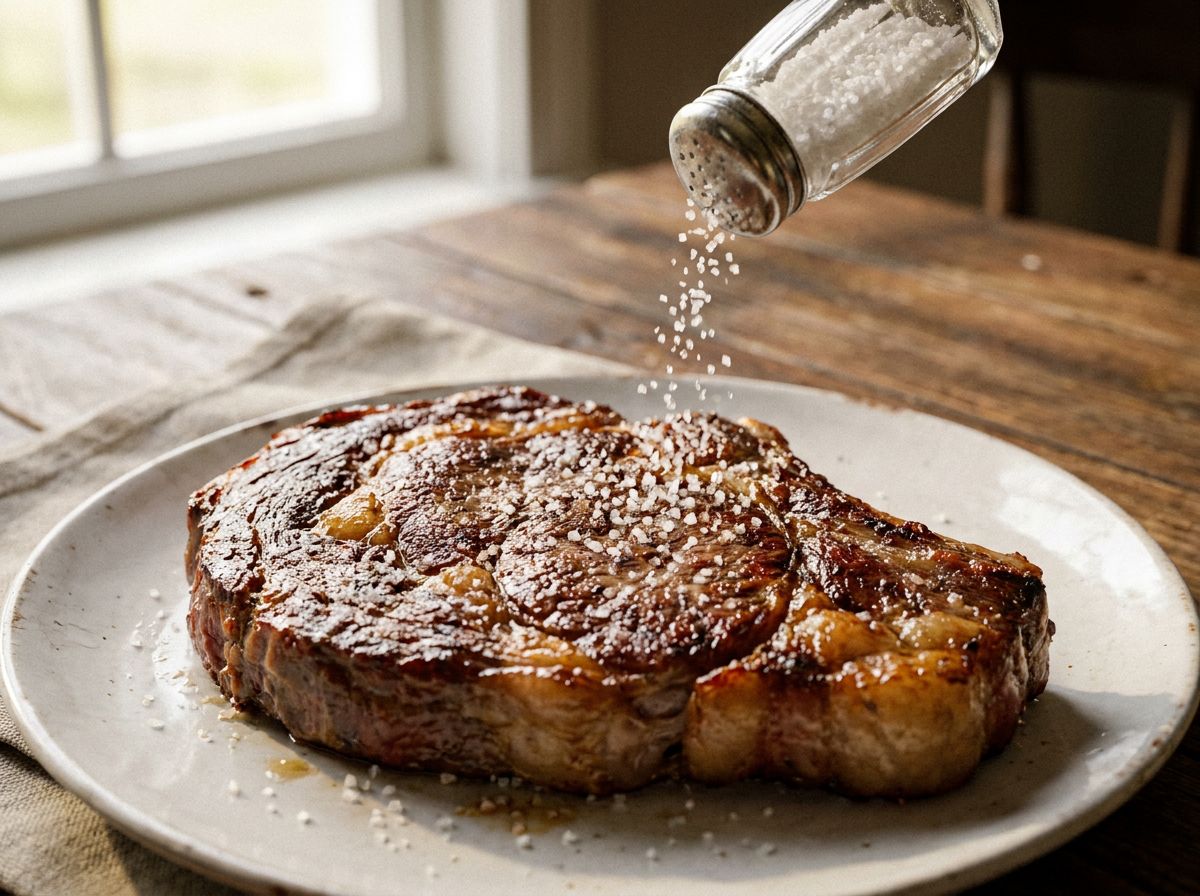
I wasn't salting my food enough.
That's it. That's the whole thing. And it almost cost me one of the most meaningful health shifts of my adult life.
How I Got It Wrong
When I started carnivore, I came in with a low-sodium mindset baked into my brain from twenty years of mainstream nutrition advice. Salt was the villain. I'd cooked for years using maybe a quarter teaspoon per meal, sometimes less. I thought I was being virtuous.
So when I switched to ribeyes and ground beef and eggs, I salted them the way I'd always salted things. A little sprinkle. A modest pinch. The kind of salting that looks reasonable on Instagram.
By week three, I felt like I was unraveling. Headaches that wouldn't quit. Lightheaded every time I stood up. Brain fog so thick I'd open the fridge and forget what I came for. My heart would pound when I climbed stairs. I was sleeping eight hours and waking up tired.
I was sure carnivore wasn't working for me. I was researching how to "transition off" gracefully. I'd already half-decided to quit.
What Was Actually Happening
Here's the part nobody told me clearly enough. When you cut carbs hard, your kidneys flip a switch. Insulin drops, and one of insulin's underrated jobs is telling your kidneys to hold onto sodium. With insulin low, your kidneys start dumping sodium fast.
This isn't a bug. It's how the body handles a metabolic shift. But it means your sodium needs go up significantly, not down. Most low-carb researchers I've read suggest somewhere between 4 and 6 grams of sodium per day during adaptation. That's roughly 2 to 3 teaspoons of salt. For someone who'd been eating maybe 1.5 grams a day, that's a massive jump.
And because sodium pulls potassium and magnesium along with it when you lose too much, the deficiency cascade compounds. The headaches, the heart palpitations, the brain fog, the fatigue. All of it lined up perfectly with what's now called "keto flu" but is mostly just an electrolyte problem.
I wasn't failing carnivore. I was salt-starved.
The Day I Figured It Out
I remember the exact meal. A friend who'd done carnivore for two years came over for lunch. I'd cooked a ribeye for each of us. I salted mine the way I always did, a thin dusting that disappeared into the crust.
He picked up the salt grinder, looked at my steak, and said, "Sarah. You have to actually salt this." Then he showered the thing. I mean genuinely covered it. The kind of salting that would've made my old self horrified.
I tried it. The steak was better, obviously, but that's not the part that mattered. By that evening my headache was gone. By the next morning I'd slept hard and woken up clear. Within three days the brain fog had lifted and the heart palpitations stopped. I haven't had them since.
Why This Mistake Is So Common
I've talked to a lot of people now who've started carnivore, and underseasoning shows up over and over. The reasons make sense once you see them.
Most of us grew up being told salt causes high blood pressure. That message has been everywhere for decades, even though the actual research on sodium and cardiovascular outcomes is much messier than the public narrative suggests. Studies like the PURE study, which followed over 100,000 people across 18 countries, actually found that very low sodium intake was associated with worse outcomes than moderate intake.
Then there's the cooking habit problem. We learned to season for a body running on glucose and stored carbohydrate. That body retains sodium pretty efficiently. Carnivore bodies don't. The same recipe needs different seasoning on a different metabolic backdrop.
And finally, salt feels indulgent. There's a part of the brain that still treats heavy seasoning like cheating, even on a diet of beef and butter. So we hold back, and we suffer for it.
What I'd Tell Someone Starting Today
If you're in your first month of carnivore and you feel like garbage, before you blame the diet, salt your food properly. Properly meaning more than feels comfortable. The taste test isn't a reliable guide right now because your palate is recalibrating along with everything else.
I keep a small dish of flaky salt next to my plate at every meal. I salt the meat in the pan. I salt it again on the cutting board. I salt it on the plate. People who watch me eat sometimes raise an eyebrow. I don't care anymore.
Some people do better adding electrolyte mixes too, especially if they're active or live somewhere hot. I've used LMNT for years now during workouts and on travel days. You can find their stuff at elementallabs.refr.cc. The DIY route works fine too if you're careful with ratios. I wrote a deeper breakdown of the differences in my electrolytes piece on Dr. Hampton's video if you want to compare.
Also, if you're on blood pressure medication, this is the moment to talk to your doctor. Carnivore plus aggressive salting can shift your readings within weeks, and your dose may need to come down. This isn't theoretical. I've seen it happen with people I know personally.
The Bigger Lesson
The thing I wish someone had told me isn't really about salt. It's about the way carnivore breaks the rules of every other diet you've tried. Things you learned to fear become essential. Things you used to chase become irrelevant. The mental model has to shift, not just the food.
The people who succeed long term aren't the ones with the strictest discipline. They're the ones who figured out which old rules to throw away. Underseasoning was the first old rule I had to release. There were others.
If you're struggling in your first month, season your food. Drink water. Sleep more than you think you need. And give yourself enough time to actually adapt before you decide whether this is working.
I almost quit. I'm so glad I didn't.
A Note Before You Go
I'm not a doctor. I've researched this deeply and worked with many people, but I'm not your doctor. If you have health conditions, take medications, or need specific guidance, talk to someone who knows your full medical picture. Everything I write is educational based on research and what I've seen work. Your situation might be different.