This post may contain affiliate links. For educational purposes only, not medical advice. Details
When Your Diet Changes, Your Brain Notices
This isn't a claim that steak cures depression. Let's get that out of the way right now. Mental health is complicated, medication saves lives, and therapy works. Don't change your treatment plan based on a blog post.
But something interesting keeps happening when people switch to carnivore. They report feeling calmer. Less anxious. More emotionally stable. Brain fog lifts. Energy stays steady instead of crashing at 2 p.m. every day. The irritability that seemed like personality starts to fade.
The reports are consistent enough, and across enough people, that they deserve a real look at the biology behind them.
The Gut-Brain Connection Is Real (And Bigger Than You Think)
Your gut produces about 95% of your body's serotonin. Not your brain. Your gut. The vagus nerve connects your digestive system directly to your brain, creating a two-way communication highway that transmits signals in both directions constantly.
When your gut is inflamed, your brain knows about it within minutes. A 2019 study in Nature Microbiology analyzed the gut bacteria of over 1,000 participants and found that people with depression had consistently lower levels of two specific gut bacteria species: Coprococcus and Dialister. Both are involved in producing compounds that directly affect brain neurotransmitter function, including dopamine pathways.
The researchers also identified a gut bacterial metabolite called DOPAC (a dopamine breakdown product) that correlated with better quality of life scores across the entire cohort. The connection between what lives in your gut and how your brain functions is not speculative. It shows up repeatedly in clinical data.
If changing your diet reduces gut inflammation and shifts your bacterial populations, the signal traveling up that vagus nerve changes too. That's not alternative medicine. That's physiology, published in peer-reviewed journals.
Inflammation: The Depression Driver Nobody Talks About
Depression isn't always a serotonin problem. The "chemical imbalance" theory that dominated psychiatry for decades is increasingly recognized as incomplete. Research over the last ten years has identified chronic low-grade inflammation as a significant driver of depressive symptoms, particularly in cases that don't respond to standard antidepressants.
C-reactive protein (CRP), interleukin-6 (IL-6), and tumor necrosis factor alpha (TNF-alpha) are all elevated in people with treatment-resistant depression. A 2020 meta-analysis in the Journal of Clinical Psychiatry confirmed the inflammation-depression link across 82 studies involving over 40,000 participants. People with elevated CRP were 2.3 times more likely to develop major depression than people with normal inflammatory markers.
Where does the inflammation come from? Many sources: stress, sleep deprivation, environmental toxins, and sedentary behavior all contribute. But diet is a major one. Processed foods, seed oils high in omega-6, refined sugar, and certain plant defense compounds can all drive inflammatory markers up. Removing them drops those markers down.
Carnivore removes all of them at once. It's not targeted anti-inflammatory therapy. It's more like turning off every inflammatory input simultaneously, then observing what happens. For many people, what happens is that their mood stabilizes in ways they didn't expect.
The Nutrient Density Factor
Depression and anxiety are linked to specific nutrient deficiencies that show up over and over in clinical research. The ones most strongly associated with mood disorders: B12, zinc, omega-3 fatty acids, iron, magnesium, and vitamin D.
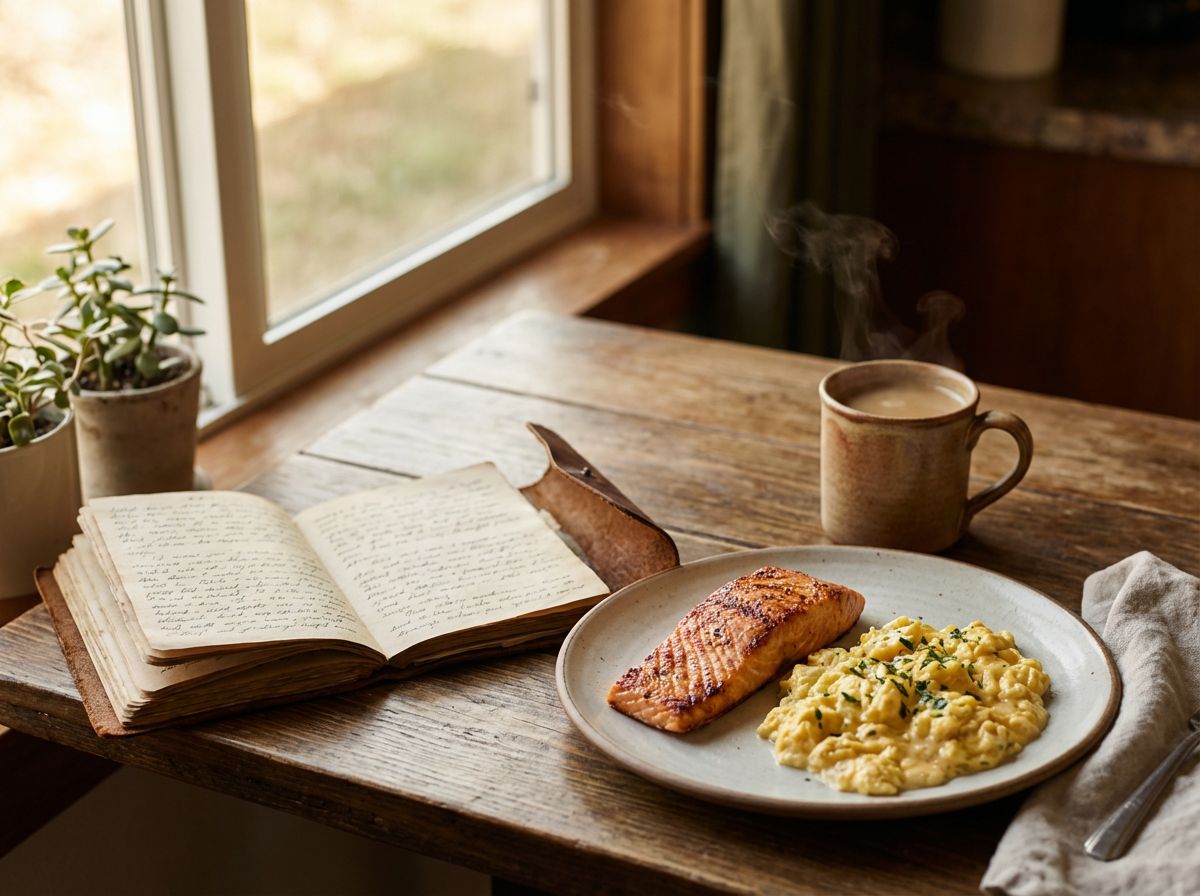
Red meat is the single best food source for B12, zinc, and heme iron. A 6-ounce ribeye steak delivers about 150% of your daily B12 needs, 60% of your zinc, and 25% of your iron in the most bioavailable form. Fatty fish like salmon provides omega-3s (EPA and DHA) that cross the blood-brain barrier and directly influence neural inflammation. Egg yolks deliver vitamin D and choline, which is essential for acetylcholine production in the brain.
A carnivore diet hits every one of these nutrients without supplementation, and it delivers them in forms your body absorbs efficiently. Plant-based sources of these same nutrients come with lower bioavailability. Non-heme iron from spinach absorbs at roughly 2-5%, compared to 15-35% for heme iron from meat. Zinc from whole grains is bound by phytates that reduce absorption by 40-60%.
B12 deficiency alone can cause depression, fatigue, memory problems, and anxiety that mimics generalized anxiety disorder. A study in BMC Psychiatry found that low B12 levels were associated with a 51% increased risk of developing depressive symptoms. Many plant-heavy diets require B12 supplementation because the nutrient simply doesn't exist in plant foods. On carnivore, B12 deficiency is essentially impossible.
Blood Sugar Crashes Feel Exactly Like Anxiety
If you've ever felt shaky, irritable, or panicky two hours after eating a bagel or a bowl of cereal, you've experienced reactive hypoglycemia. Your blood sugar spikes from the carbohydrate load, insulin overreacts and pushes glucose down too hard, and blood sugar crashes below your baseline.
Your body responds to this crash with cortisol and adrenaline to bring blood sugar back up. Those stress hormones feel exactly like an anxiety attack: racing heart, sweaty palms, tight chest, sense of dread, difficulty concentrating. It's not a psychological problem. It's a blood sugar regulation problem that produces psychological symptoms.
Continuous glucose monitor data from people eating standard diets shows blood sugar swings of 40-80 mg/dL after high-carbohydrate meals. Those same people on carnivore show fluctuations of 10-20 mg/dL throughout the entire day. The line on the graph goes nearly flat.
Carnivore eliminates the spike-crash cycle entirely. Without significant carbohydrate intake, blood sugar stays stable all day. No spikes, no crashes, no cortisol dumps, no false anxiety signals. Multiple people in carnivore communities describe this as the first time they felt "calm" in their bodies, and many didn't realize their anxiety had a metabolic component until the dietary change made it disappear.
Omega-3 to Omega-6 Ratios Matter for Your Brain
Your brain is roughly 60% fat by dry weight, and the type of fat you eat influences the composition of your neural cell membranes. Omega-3 fatty acids (EPA and DHA) reduce neural inflammation and support neurotransmitter function. Omega-6 fatty acids, when consumed in excess, promote inflammatory signaling in the brain.
The typical Western diet has an omega-6 to omega-3 ratio somewhere between 15:1 and 20:1, driven largely by seed oils in processed food. Historical human diets were closer to 2:1 or 3:1. A carnivore diet built around grass-fed beef, wild-caught fish, and pastured eggs typically lands around 3:1 to 4:1.
A 2019 meta-analysis in Translational Psychiatry reviewed 26 randomized controlled trials and found that omega-3 supplementation had a significant positive effect on depressive symptoms, with EPA being more effective than DHA for mood specifically. On carnivore, you're getting these fatty acids from whole food sources every day rather than relying on fish oil capsules.
What the Community Data Shows
The 2021 Harvard-affiliated carnivore diet survey collected data from over 2,000 participants who had been eating this way for at least six months. Among participants who reported pre-existing mental health conditions, 96% reported improvement in depression symptoms and 92% reported improvement in anxiety.
Self-reported data with no control group and clear selection bias. People who feel better are more likely to fill out surveys. These limitations are real and should be stated clearly. This is not the same as a randomized controlled trial.
But the consistency of these reports, across thousands of people, across multiple surveys and online communities, and across different countries and demographics, points to something biologically meaningful. At minimum, it suggests that dietary interventions deserve a bigger role in mental health research than they currently hold. Several research groups, including teams at Stanford and Harvard, have begun designing controlled trials specifically looking at meat-based diets and mood disorders.
The Important Caveats (Please Read This Part)
Don't stop your medication without talking to your doctor. Don't skip therapy because you started eating steak. Mental health treatment is not either-or, and the internet is full of people who will tell you that their diet fixed everything and you don't need pills. That advice can be dangerous.
Diet is one input into a complex system. It can help. For some people, it helps dramatically. But it's not a replacement for professional care, and anyone who tells you otherwise is oversimplifying something that shouldn't be oversimplified.
If you want to try carnivore alongside your existing treatment, here's a reasonable approach. Tell your doctor what you're doing. Track your symptoms honestly using a simple daily mood score (1-10 scale for mood, anxiety, energy, and sleep quality). Give it at least 30 days before evaluating because the adaptation period can temporarily worsen symptoms before they improve. And if you notice meaningful improvement, bring that data to your care team so you can have an informed conversation about whether adjustments make sense.
Your brain runs on the nutrients you give it. Giving it better raw materials is always a reasonable thing to try, as long as you're doing it alongside proper care, not instead of it.
Not a doctor. I'm just someone who's deep in this community and reads everything, so take the health stuff with a grain of salt. Mental health is the one topic where I'll push harder than usual: don't taper or stop an antidepressant on your own, and if you're having thoughts of hurting yourself, skip the diet experiment and call a crisis line or your doctor today. Food can be part of the picture. It isn't the whole picture, and it isn't a replacement for care.